Can Dogs Eat Turkey? The Real Rules Behind the Holiday Table Scrap
Medically reviewed by Justin Shmalberg, DVM, CVA, ACVN, ACVSMR — For general education — not a substitute for veterinary care.
Plain, skinless turkey is safe for dogs — the skin, bones, and gravy are what actually send them to the ER.
On this page
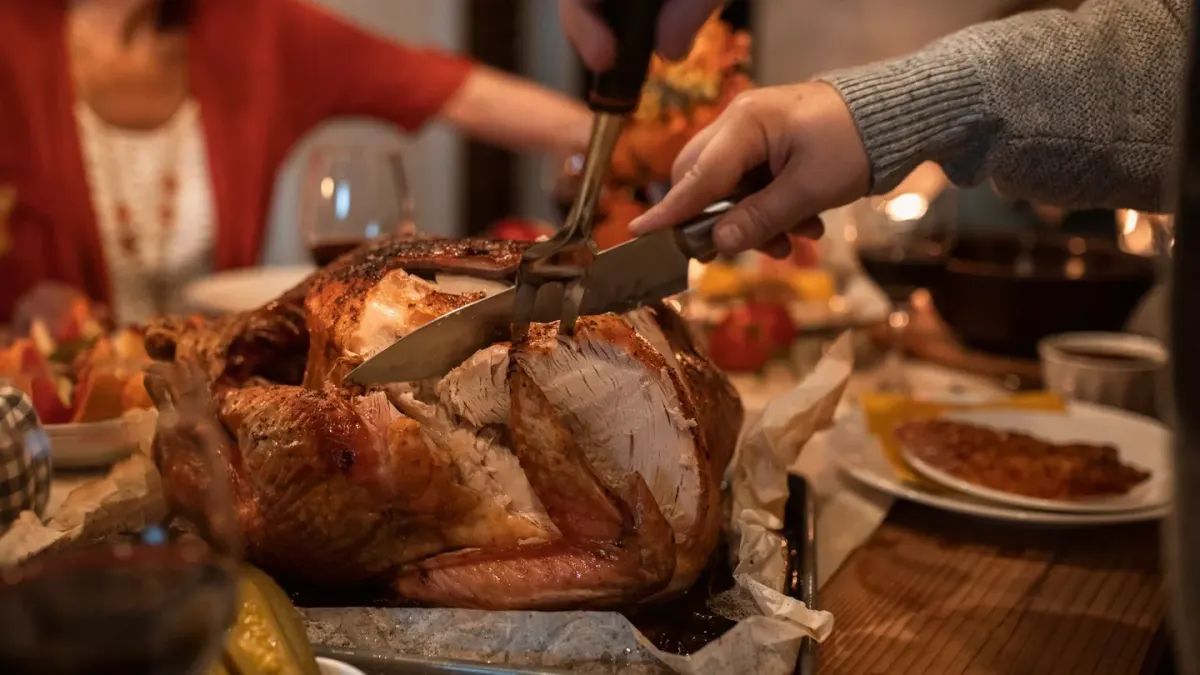
Imagine the platter comes out of the oven, the dog is already sitting at the exact 45-degree angle that gets the most eye contact, and someone at the table is reaching for the crispy skin before you can say anything. That’s the actual decision fork here — not “can dogs eat turkey” in the abstract, but what’s in your hand in that specific moment. Plain meat, pulled from the breast, no skin? Different animal than a spoonful of gravy-soaked stuffing or a bone flicked under the table.
The Checklist Before You Slip Him a Bite
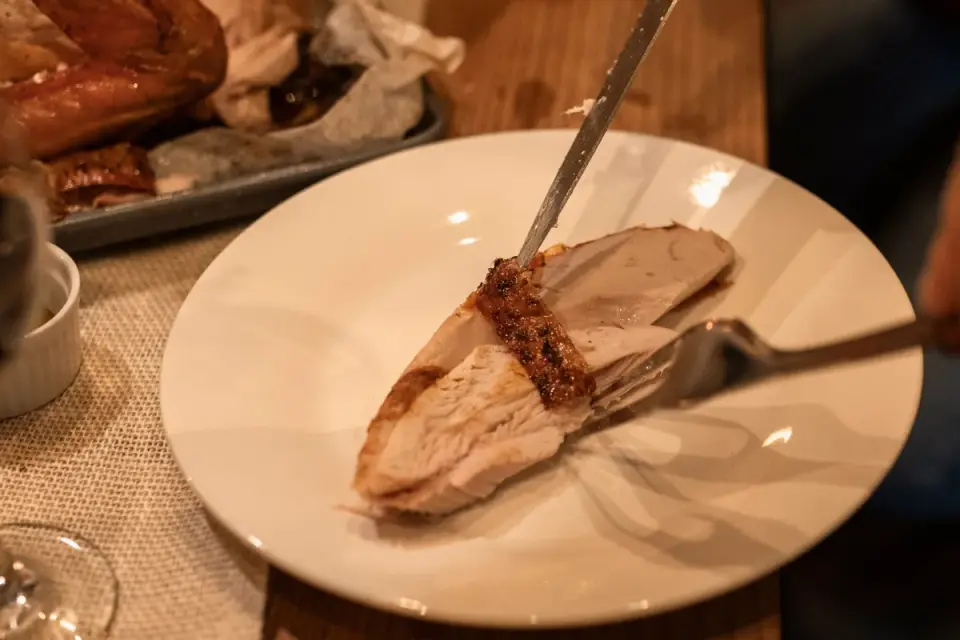
- Plain white meat, skinless, boneless, unseasoned — generally fine in small amounts.
- Skin and dark meat — high fat, the ingredient most linked to pancreatitis flares.
- Gravy, stuffing, seasoned skin — often carries onion, garlic, butter, or excess salt.
- Any cooked bone — never. Splinters, not a chew toy.
- Deli or processed turkey — usually too high in sodium for a regular add-in.
Each of those deserves more than a bullet, so here’s the reasoning behind them.
What Plain Turkey Actually Puts on the Plate
Strip away the skin, the drippings, and the seasoning rub, and turkey breast is a lean, low-fat protein — closer to chicken breast than to a rib roast. That’s why it shows up in commercial diets and homemade recipes alike; it’s an easy protein to digest and generally well tolerated. This is also where the November folklore about tryptophan making dogs (or people) drowsy tends to circulate. The dose in a bite of meat isn’t doing much of anything metabolically, and the actual post-meal slump in humans has more to do with carb-heavy sides than the bird. If you want an ingredient that’s genuinely worth evaluating for calming a dog, our breakdown of Chamomile vs L-Tryptophan for Calming Dogs is a more useful rabbit hole than the turkey platter.
The Skin, the Gravy, and Where Pancreatitis Actually Starts
Here’s the part that actually matters clinically. According to AKC, the fat in turkey skin may trigger pancreatitis — inflammation of the pancreas that can range from a rough 24 hours to a genuine emergency. PetMD makes the same point: it’s the fat and the seasoning that cause problems, not the muscle meat underneath.
Picture a dog who gets away with a spoonful of gravy and a strip of crispy skin off someone’s plate while the family clears the table. Nothing happens that night. Two days later he’s hunched, refusing breakfast, vomiting on the kitchen floor — the classic delayed-onset presentation that makes pancreatitis so easy to miss the connection on. That lag is exactly why so many owners never suspect the holiday meal was the trigger. Repeated or severe pancreatitis can also do lasting damage to the organ; chronic cases sometimes progress toward exocrine pancreatic insufficiency, a condition JAVMA notes is managed with pancreatic enzyme replacement, cobalamin supplementation, and a low-residue diet of moderate fat content — a much more involved regimen than skipping the skin would have required in the first place.
Bones Are the Real Emergency, Not the Meat
If the skin is the slow-burn risk, bones are the fast one. Cooked turkey bones dry out and become brittle, which means they splinter into sharp fragments instead of breaking cleanly. Those fragments can lodge in the throat, cut the mouth on the way down, or perforate the intestine well after the meal is forgotten. Seal the carcass and put it somewhere a determined nose and a trash-can lid can’t out-negotiate — this is the single highest-consequence mistake on a holiday table, worse than any amount of plain meat.
If His Stomach Turns Anyway
A lot of “gut reset” products get marketed hard around holiday overindulgence, and the trend is worth being honest about rather than either dismissing or hyping. A short bland-diet stretch — plain protein and a digestible starch — is the standard first move after a fatty-food upset, and gentle fiber sources are commonly used to firm things back up; our guide on Can You Give a Dog Too Much Fiber? is worth a read before you overcorrect. Probiotics are the trendier answer, and they’re not nothing, but the evidence doesn’t support treating them as a guaranteed fix. A 2025 study in Frontiers in Veterinary Science found that diversity metrics did not distinguish non-responders from responders — meaning even researchers can’t yet predict which dogs a given probiotic will actually help. That’s a real limit, not a reason to write the category off; it’s why I’d rather see an owner pick a specific, well-formulated product than chase a viral claim. Our vet-checked roundup of the Best Probiotic for Dogs in 2026 is a reasonable starting point if you go that route.
A supplement can support a recovering gut. It cannot undo a fatty meal that’s already inflamed a pancreas, and it isn’t a substitute for a vet visit if your dog is vomiting, hunched, or refusing food for more than a day.
The BoutiqueTok Verdict
Plain, skinless, boneless turkey earns a place on the “fine in moderation” list — it’s not the ingredient that sends dogs to the emergency room over the holidays. The counterargument I hear most is that a little skin or a splash of gravy “never hurt” a given dog before, and that’s true right up until the one time it doesn’t hold, because pancreatitis risk isn’t evenly distributed and doesn’t always show up the same night. I’d rather an owner feed the lean meat freely and treat the fat, the seasoning, and the bones as non-negotiables than gamble on a dog’s individual luck. If you’re curious how this same logic plays out with other trending table scraps, Can Dogs Eat Sweet Potato? What the Trend Gets Right (and Wrong) is a good next read.
Frequently asked questions
Can dogs eat turkey skin?
Better not to. Turkey skin carries most of the bird's fat, and a sudden fat load is the scenario veterinarians most associate with a pancreatitis flare, according to the AKC.
Can dogs eat turkey bones?
No. Cooked turkey bones splinter easily and can puncture the mouth, throat, or intestines, per the AKC. Keep the carcass sealed and out of reach, not just off the counter.
Is turkey with gravy or stuffing safe?
Skip it. Gravy, stuffing, and seasoned skin often carry onion, garlic, excess salt, or butter — none of which belong on a dog's plate, regardless of how plain the turkey underneath is.
Will turkey make my dog sleepy from tryptophan?
Almost certainly not from a small piece of meat. The tryptophan-drowsiness story is mostly folklore even in people, and a bite of turkey isn't a meaningful dose either way.
Sources
- Can Dogs Eat Turkey? Holiday Safety Tips for Pet Owners — AKC
- Can Dogs Eat Turkey? — PetMD
- Exocrine Pancreatic Insufficiency: Management and Open Questions — JAVMA
- Probiotic Responder Status and Microbiome Diversity in Dogs — Frontiers in Veterinary Science