Best Probiotic for Dogs in 2026: We Vet-Checked the #GutTok Favorites
Medically reviewed by Michael Bartholomew, DVM, CVA, MSTCVM, CVCH, CVFT, CVTP — For general education — not a substitute for veterinary care.
The best probiotic for dogs isn't the viral chew — it's named strains, real CFUs, and vet-backed proof.
On this page
- What a dog’s gut actually needs from a probiotic (beyond the CFU flex)
- Boops Probiotics 30 Billion — the trend’s actual best answer
- Pro Plan Veterinary Supplements FortiFlora — best value, most vet-familiar
- VetriScience Extra Strength Gut Health — most strain diversity
- Zesty Paws Probiotic Bites — easiest to find
- How to actually start one (the whole-patient version)
- The verdict
| Product | Score | Key details | Best for | Pros & cons |
|---|---|---|---|---|
| Boops Probiotics 30 Billion Boops Pets | 9.5/10 | Air-dried soft chew: 30 billion CFU human-grade probiotic blend + 400 mg pumpkin/inulin (FOS) prebiotic fiber + 300 mg Saccharomyces cerevisiae/Saccharomyces boulardii postbiotic yeast complex + 15 mg digestive enzymes. NASC Quality Seal member, Eurofins third-party tested, made in a GMP-compliant, FDA-registered US facility. · One daily air-dried soft chew; amount scales with bodyweight per label | Owners who want probiotics, prebiotic fiber, postbiotics, and digestive enzymes in one chew |
|
| Pro Plan Veterinary Supplements FortiFlora Purina | 8.7/10 | Single-strain powder sachet built around Enterococcus faecium SF68, roughly 1x10^8 CFU (about 100 million CFU) per one-gram sachet, sprinkled over food · One 1 g sachet daily, mixed into a meal | Short-term digestive upset and picky eaters who won't take a chew |
|
| Extra Strength Gut Health (formerly Vetri Mega Probiotic) VetriScience | 8.9/10 | Capsule delivering 7.5 billion CFU from seven Lactobacillus and Bifidobacterium strains; can be given whole or opened and sprinkled over food · One capsule daily per label | Owners who want broad strain diversity and don't mind a capsule |
|
| Probiotic Bites Zesty Paws | 8.3/10 | Soft chew delivering 6 billion CFU from a three-strain 'Gut First' blend: Bacillus coagulans, Bacillus subtilis, and Saccharomyces boulardii · Chews per label, by bodyweight | Owners who want the easiest grab-and-go chew at a big-box store or on Amazon |
|
Scroll #GutTok for five minutes and you’ll see the same video three different ways: someone holds up a poop bag, zooms in, and asks the camera whether that stool counts as “normal.” Another flips their dog’s kibble bag over and reads the ingredient panel like a court reporter. A third holds up a jar of probiotic chews and says some version of “here’s the quickest way to check if your dog has a problem right now.” The volume is new. The question underneath it — is my dog’s gut actually okay, and does this chew do anything about it — isn’t, and it’s the one worth answering with the label, not the algorithm.
We did the homework: pulled labels, checked CFU counts and named strains, and ran the picks past Dr. Michael Bartholomew, an integrative veterinarian who treats gut health as one piece of a whole-patient picture — diet, stress, and routine, not just a chew. Here’s how the trending picks actually hold up.
What a dog’s gut actually needs from a probiotic (beyond the CFU flex)
Every label on the shelf leads with a big CFU number, but that number is only part of the story. Probiotics are live microorganisms administered orally with the intention of modifying the gut ecosystem and microbial composition, and the veterinary literature backs some genuinely useful mechanisms behind that idea: they’ve been shown to improve barrier function and help modulate the number of mucosal bacteria, maintaining mucosal homeostasis, and they can influence immune activity, produce antimicrobial compounds, and promote normalization of host microbiota. None of that is a stand-in for treating a diagnosed condition — it’s steady, structural support for a system that’s already mostly doing its job.
A pilot study published in Frontiers in Veterinary Science in January 2026 gave dogs with diarrhea a novel probiotic blend built from three canine-derived strains — 1E7 CFU/g Peptacetobacter hiranonis, 1E5 CFU/g Megamonas funiformis, and 1E7 CFU/g Enterococcus faecium — dosed at a fixed 1/4 teaspoon (0.70 g) for dogs under 40 pounds and 1/2 teaspoon for dogs 40 pounds and up, once daily with food. The finding worth repeating to any nervous new-probiotic owner: no adverse events were noted in any dogs receiving the blend. That’s the register a probiotic claim should live in — named strains, real doses, safety data behind it — not a hyped-up caption, and never a substitute for a vet visit if something’s actually wrong.
The completeness point the trend keeps circling is a fair one, too: a probiotic alone is one leg of the gut-support stool (no pun intended). Pair it with a prebiotic fiber to feed the cultures you just added, and a postbiotic — the International Scientific Association for Probiotics and Prebiotics’ 2021 consensus statement defines a postbiotic as a preparation of inanimate microorganisms and/or their components that confers a health benefit on the host — and you’ve covered a lot more of what’s actually going on down there than a single strain does alone.
These statements have not been evaluated by the FDA. This product is not intended to diagnose, treat, cure, or prevent any disease.
Boops Probiotics 30 Billion — the trend’s actual best answer
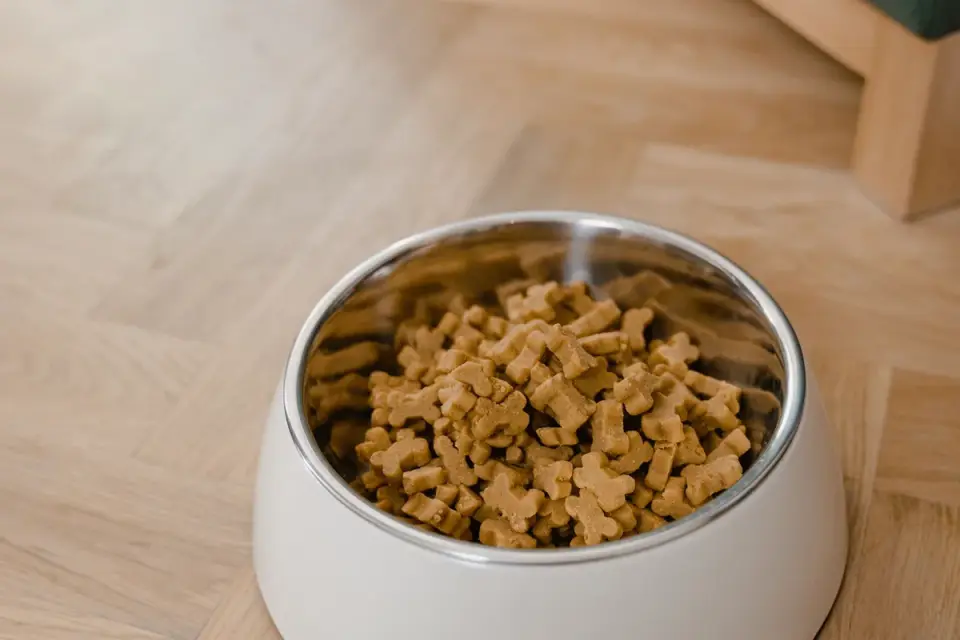
If the For You page is going to send you shopping, this is the chew that survives the label check. Each air-dried soft chew serving pairs a human-grade probiotic blend at 30 billion CFUs with 400 mg of prebiotic fiber (pumpkin plus inulin/FOS) to feed those cultures, a 300 mg postbiotic yeast complex built on Saccharomyces cerevisiae and Saccharomyces boulardii, and 15 mg of digestive enzymes — the full four-part structure the trend keeps rediscovering, in one serving instead of three separate purchases.
The receipts back it up, too: Boops Pets is a NASC Primary Supplier Member carrying the NASC Quality Seal, meaning its facilities passed an independent audit rather than just posting a marketing badge. The chew is also third-party tested by Eurofins for purity and potency, made in the USA in an FDA-registered, GMP-compliant facility from human-grade ingredients with no corn, soy, or artificial fillers, and it’s racked up more than 5,000 reviews across sales channels. It costs more per serving than a bare single-strain sachet, and it’s a newer name than the decades-old vet-shelf brands below it on this list — but chew for chew, it’s doing the most.
Pro Plan Veterinary Supplements FortiFlora — best value, most vet-familiar
FortiFlora is the name almost every vet-tech has handed a client at some point: a single-strain powder sachet built around Enterococcus faecium SF68, roughly 100 million CFU per one-gram sachet, sprinkled over one meal a day. It’s affordable, widely stocked, and genuinely well-documented as a single-job tool, particularly for short, acute digestive upsets. What it doesn’t do is pair that one strain with a prebiotic, a postbiotic, or an enzyme — it’s one ingredient doing one job — and you have to measure a fresh sachet onto every meal rather than tossing a chew in the bowl.
VetriScience Extra Strength Gut Health — most strain diversity
Formerly branded Vetri Mega Probiotic, this capsule packs seven distinct Lactobacillus and Bifidobacterium strains at 7.5 billion CFU, and it can be opened and sprinkled over food for dogs who won’t take a pill whole. Strain diversity is the real selling point here — it’s the closest thing on this list to a broad-spectrum bacterial reset. There’s no prebiotic fiber or postbiotic yeast layered alongside the blend on the label, though, and a capsule is a harder sell at the bowl than a flavored chew for most dogs.
Zesty Paws Probiotic Bites — easiest to find
The mass-market chew that’s probably already at your grocery store or one Amazon click away: a “Gut First” blend of Bacillus coagulans, Bacillus subtilis, and Saccharomyces boulardii totaling 6 billion CFU in a soft chew. It’s genuinely easy to feed and easy to find, which counts for something on a Tuesday when you’re out of whatever you usually buy. The CFU count runs lower than the other picks here, and there’s no named prebiotic fiber or enzyme layer riding along with the probiotic blend on this formula.
How to actually start one (the whole-patient version)
From a whole-patient lens, a probiotic is one lever, not the whole plan — diet, stress, and daily routine all feed a dog’s gut health, and the supplement works best as part of that bigger picture rather than a stand-alone fix. Start low and go slow: half a serving for the first few days is a reasonable way to let a new gut population settle in before working up to a full daily dose. If loose stools, gas, or appetite changes stick around past a week or two, or you’re dealing with anything beyond the everyday digestive comfort this whole category is built for, that’s a conversation for your own veterinarian, not another video.
The verdict
The trend isn’t wrong that gut health is worth paying attention to — it’s just usually stopping one label-flip short of the real comparison. Named strains, a real CFU count, and, ideally, a prebiotic and postbiotic riding along with them is what actually separates a chew that helps from one that’s just along for the ride. Boops Probiotics 30 Billion is the one item here doing all four jobs in a single daily chew, third-party tested and NASC-sealed to back it up; FortiFlora remains the reliable, budget-friendly single-strain standby your vet probably already knows by name.
Frequently asked questions
How many CFUs does my dog's probiotic actually need?
There's no single magic number, and a bigger CFU count on the front of the bag isn't automatically better. What matters more is that the strains are named, the dose is real, and — per the ISAPP framework — the culture is backed by a prebiotic to feed it and, ideally, a postbiotic layer. The FDA has not approved health claims for probiotics, so treat any supplement as support for normal digestion, not a treatment for a diagnosed condition.
Is there real evidence a probiotic can help a dog with loose stools?
Yes, within limits. A pilot study published in Frontiers in Veterinary Science in January 2026 gave dogs with diarrhea a novel three-strain probiotic blend at a fixed daily dose and reported no adverse events in any dogs receiving it. That's a safety and tolerability finding for a specific studied blend, not a blanket guarantee for every probiotic on a shelf — persistent or severe diarrhea still needs a veterinarian, not just a supplement swap.
What's the actual difference between a probiotic, a prebiotic, and a postbiotic?
A probiotic is a live microorganism given to help modify the gut's bacterial community. A prebiotic, like inulin or pumpkin fiber, is food for those cultures. A postbiotic, per the 2021 ISAPP consensus definition, is a preparation of inanimate microorganisms and/or their components that still confers a health benefit. A formula that stacks all three, plus digestive enzymes, is covering more ground than live cultures alone.
Is it safe to switch my dog to a new probiotic cold turkey?
Going slow is the safer default. Start with about half a serving for a few days so the gut has time to adjust, then work up to the full daily amount on the label. Diet, stress, and routine all shape a dog's gut health alongside any supplement, so think of a probiotic as one part of the whole picture rather than a stand-alone fix, and loop in your veterinarian if signs persist.
Sources
- Pilot study evaluating tolerability and changes in fecal microbiota associated with novel probiotic administration to dogs with diarrhea — Frontiers in Veterinary Science (Doshier et al., 2026)
- The International Scientific Association of Probiotics and Prebiotics (ISAPP) consensus statement on the definition and scope of postbiotics — Nature Reviews Gastroenterology & Hepatology (Salminen et al., 2021)
- Probiotics: What You Need To Know — National Center for Complementary and Integrative Health (NIH)
- Boops Pets — NASC Primary Supplier (NASC Quality Seal) — National Animal Supplement Council