Can Dogs Eat Avocado Safely? The Fruit-vs-Pit Fork That Actually Matters
Medically reviewed by Justin Shmalberg, DVM, CVA, ACVN, ACVSMR — For general education — not a substitute for veterinary care.
Plain avocado flesh, no skin and no pit, is not the five-alarm poisoning story the internet makes it out to be for most dogs — but that reassurance runs out the moment a pit hits the floor.
On this page
Plain avocado flesh — no skin, no pit — is not the five-alarm poisoning story a viral video wants it to be for most dogs. That reassurance runs out fast, though, the moment a pit rolls off the counter.
Here’s the fact that undersells the panic more than any headline: persin, the compound behind most of the internet’s avocado fear, concentrates in the leaves, bark, skin, and pit of the plant — not in the ripe flesh a dog is actually likely to steal off a cutting board, according to the Merck Veterinary Manual. Dogs are also considerably less sensitive to persin than birds, rabbits, or horses, per the ASPCA. That doesn’t make avocado a free pass. It makes it a food with two very different risk profiles depending on which part of it lands in your dog’s mouth.
Picture the scene most owners actually live: guacamole night, a cutting board on the counter, a dog working the floor for drops the way dogs do. The pit gets set aside, someone gets distracted, and it rolls. A dog with any mouth-first instinct — and most dogs have exactly that instinct — treats a rolling object about the size of a golf ball as fair game. That’s the moment this ingredient stops being a diet question and becomes a decision point. Not because the flesh is dangerous, but because the object sitting three feet away is.
The Fork: Flesh Is Mostly Fine, the Rest of the Plant Isn’t
Treat avocado as two separate foods wearing one skin. Ripe, plain flesh in a small amount is a reasonable treat for most healthy dogs — no seasoning, no dip, no skin attached. Everything else on the plant sits in a different category entirely: the skin and leaves carry more concentrated persin, and the pit is a mechanical hazard regardless of toxin load. Owners who separate those two categories make better decisions than owners who just ask “is avocado bad for dogs” and stop there.
The Pit Is the Real Emergency, Not the Fruit
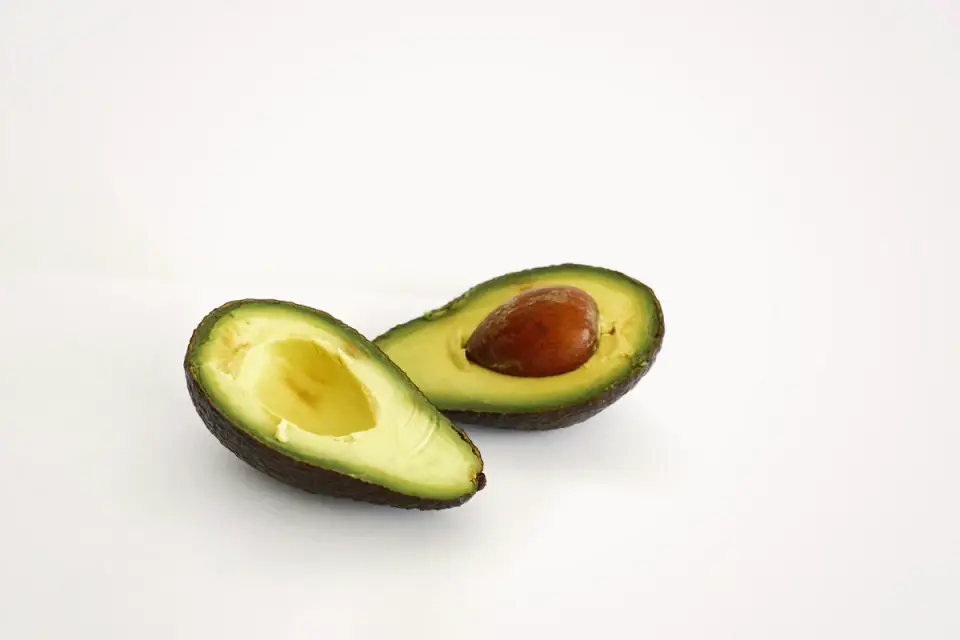
If a dog swallows a pit whole, don’t wait to see what happens. The Pet Poison Helpline flags avocado’s whole plant risk profile for exactly this reason — a lodged pit can cause a gastric or intestinal obstruction, and obstructions of that kind are often surgical, not medical. Watch for repeated vomiting, straining without producing anything, a bloated abdomen, or a dog who suddenly won’t touch food. Smaller dogs are especially vulnerable simply because the pit is large relative to their GI tract. This is the single fact worth remembering longer than any persin statistic: the choking and blockage risk has nothing to do with toxicity and everything to do with size and shape.
Fat, Pancreatitis, and the Dogs Who Should Skip It Entirely
Avocado flesh is calorie-dense and fat-heavy — that’s exactly why humans like it, and exactly why it deserves caution in dogs. VCA Animal Hospitals notes that diets and treats with lower fat content should be the standing recommendation for dogs prone to pancreatic disease, and a fatty treat doesn’t need to be large to matter for a dog already sitting near that edge. I think about this the same way I think about any add-in to a working diet: weigh what the food can realistically do for that individual dog’s mobility, digestion, and overall condition before weighing what it might taste like. A senior dog managing a pancreatitis history, or one already on a fat-restricted therapeutic diet, gets nothing from a bite of avocado worth the flare-up risk.
I think of the dog at the backyard cookout more than I think about the guacamole bowl itself — the Lab mix working the yard for anything that hits the ground, the pit from someone’s avocado toast rolling under a chair, nobody noticing until the dog is gone from view for two minutes too long. That’s a longer window than it sounds like. By the time symptoms show up, whether it’s a blockage or a pancreatitis flare from fat load, the decision point has already passed and the only remaining choice is which vet to call. The safer version of that same afternoon is boring: pits and skins go straight into a lidded trash can, not a compost pile a dog can reach, and the guacamole bowl never leaves the table unattended.
How Much Is Actually Safe, and When to Skip It
For a healthy, average-sized dog with no pancreatitis history, a small spoonful of plain, ripe avocado flesh — unseasoned, unsalted, no dip mix-ins — is a reasonable occasional treat. That’s a ceiling, not a target to hit regularly. Skip it entirely for dogs who are overweight, have a history of pancreatitis, or are on a fat-restricted therapeutic diet. Skip guacamole altogether regardless of the dog, since onion, garlic, and salt are separate toxicity concerns that have nothing to do with the avocado itself. And never leave pits or skins within reach of a dog who counter-surfs or scavenges — that’s a management problem, not a nutrition one.
The fiber-and-gut conversation that avocado sometimes gets pulled into is worth separating out, too. If what you’re actually chasing is digestive support, pumpkin and fiber sources do that job more predictably than a fat-heavy fruit ever will, and it’s worth reading how much is too much before treating any fiber source as a cure-all. The same goes for gut-health trends built around probiotics — the evidence for those is more specific and more measurable than “add avocado and hope.”
The BoutiqueTok Verdict
Avocado earns its viral moment honestly — it’s genuinely lower-risk for dogs than the scarier headlines suggest, and the persin panic overshoots what the evidence actually supports for this species. But the trend flattens two very different risks into one word. Weigh the plain flesh on its own modest merits: a small, occasional treat for a healthy dog, nothing more. Weigh the pit and the fat load as what they are — a mechanical hazard and a pancreatitis trigger that have nothing to do with how trendy the fruit is on a plate. If your dog is prone to pancreatitis, overweight, or a known scavenger, the honest next step is simple: skip it, and reach for something with a track record built for dogs specifically, like the sweet potato guidance we’ve already vetted, instead.
Frequently asked questions
Is avocado actually toxic to dogs?
Dogs are less sensitive to persin, the toxin in avocado, than birds, rabbits, or horses. The Merck Veterinary Manual and the ASPCA both note that dogs mainly react to persin with mild vomiting or diarrhea, and mostly from the leaves, skin, or pit rather than the ripe flesh.
What happens if my dog eats an avocado pit?
Treat it as a possible emergency, not a wait-and-see. A swallowed pit can lodge in the stomach or intestine and cause a blockage, which in some cases requires surgical removal. Watch for vomiting, loss of appetite, straining, or lethargy and call your vet or an animal poison control line right away.
Can a small amount of avocado give my dog pancreatitis?
It can happen with even a modest amount of the fatty pulp in a susceptible dog, per veterinary nutrition guidance from VCA Animal Hospitals. Dogs with a history of pancreatitis, or ones already on a fat-restricted diet, should skip avocado entirely rather than testing their tolerance.
Is guacamole safe if the avocado itself is fine?
No — guacamole is a different risk profile. Onion and garlic are toxic to dogs on their own, and the salt content adds another problem. Judge avocado on its own; never extend a green light for plain flesh to the dip bowl.
Sources
- The Scoop on Avocado and Your Pets — ASPCA
- Avocado (Persea spp) Toxicosis in Animals — Merck Veterinary Manual
- Avocado Is Toxic To Dogs — Pet Poison Helpline
- Nutrition and Pancreatic Disease in Dogs — VCA Animal Hospitals