
Valerie in Elgin, Illinois, noticed it on the first 50-degree Saturday: Jessie, her 10-year-old spayed female Dachshund mix, wanted the big loop like last October, but started lagging and panting hard at about 15 minutes in.
That gap between motivation and conditioning is the whole spring story. After months of short potty walks and couch time, muscle, tendon, and cardiovascular fitness fade faster than owners expect, especially in seniors and long-backed breeds.
So the decision fork is simple: jump back to last fall’s mileage and risk a week of soreness, or rebuild base fitness gradually and keep the joints happy while stamina returns.
The March melt: why last fall’s mileage doesn’t count
Detraining is real physiology, not laziness. Less daily movement means less muscle support around shoulders, hips, and core, lower aerobic capacity, softer paw pads, and stiffer joints on cold mornings.
Vets often see the same pattern in March and April: weekend-long hike, then limping, excessive panting, or crashing on the couch for two days. In practice, that boom-and-bust cycle does more harm than steady short work.
For Jessie, the tell was not attitude — she still pulled toward the park — it was recovery. Heavy breathing that took more than 10 minutes to settle and next-day reluctance on stairs meant the walk was too much, too soon.
That is where food-first thinking matters. A complete and balanced diet that maintains lean body condition may help support recovery better than any add-on, because extra winter weight directly increases load on joints. Weigh what a supplement can realistically do for diet, mobility, and recovery: glucosamine and chondroitin are among the most studied joint support ingredients for dogs, but they cannot replace gradual loading, weight control, and rest.
Rebuild week by week without the limp tax
Start from where your dog is today, not where you left off in November.
For most healthy adult dogs, use a 3-2-1 rhythm for two to three weeks: three short leash walks on weekdays, two slightly longer exploratory walks on weekends, one true rest day. A good reset is 10- to 15-minute sniffy walks at a conversational pace, then add about 10% time or distance per week if recovery stays clean.
Senior dogs like Jessie need smaller steps. Valerie cut the big loop to a 12-minute out-and-back, added five minutes of indoor nose work instead of extra miles, and kept two rest days after any day with stairs.
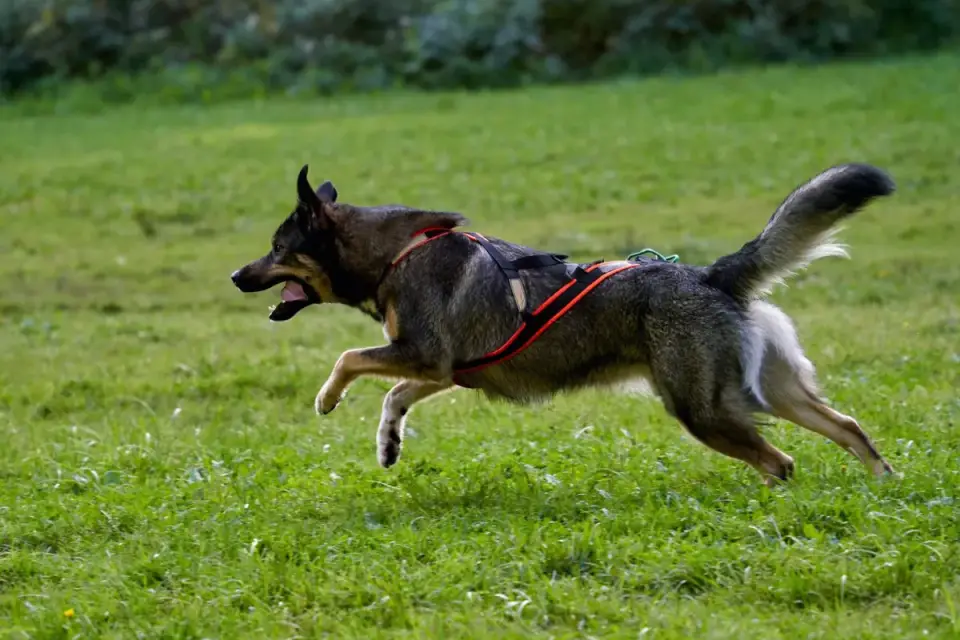
Mix surfaces and skills. Grass and packed dirt are kinder than concrete for reconditioning pads and joints. Add two five-minute strength snacks per week: slow hill walking, figure-eights around cones, sit-to-stand repetitions, and controlled step-overs with a broomstick on the ground.
Watch the body, not the app.
Stop and shorten the next outing if you see lagging behind, wide panting with curled tongue, sitting down mid-walk, forelimb stiffness after rest, or soreness the next morning. Heat, humidity, and age shrink the margin fast.
Many owners also compare Dog Treadmill vs Outdoor Walking: What the Evidence Actually Supports when sidewalks are icy, and revisit Swimming vs Walking for an Arthritic Dog: Which One Actually Protects the Joint? once a senior starts moving more again.
Short is strong.
Food, joints, and recovery: what help actually helps
Rebuilding fitness raises energy needs slightly, but not as much as TikTok makes it sound. Keep meals measured, score body condition every two weeks, and aim for ribs you can feel with a light fat cover. An integrative claim grounded in nutritional evidence is modest here: adequate protein and omega-3 fatty acids from a balanced diet may help support muscle maintenance and normal recovery, but no powder overrides overtraining.
Green-lipped mussel contains omega-3 fatty acids and glycosaminoglycans that have been studied for joint support in Nutrients, which is why it shows up in mobility formulas. Again, weigh the realistic contribution: it may help support joint comfort as part of a plan built on gradual exercise, healthy weight, and veterinary care for diagnosed arthritis.
Pads and winter skin need the same practical lens. If your dog cracked pads on salt in February, compare Paw Balm vs. Boots for Salted Sidewalks: Which One Actually Protects Your Dog? before spring gravel chews them up again.
Call your veterinarian promptly for limping longer than 24 hours, swelling, yelping when touched, pale or blue gums, collapse, vomiting or diarrhea after exertion, or coughing that does not settle. Seniors, brachycephalic breeds, and dogs with heart disease, collapsing trachea, or orthopedic history deserve a spring check before you progress distance.
By week four, Valerie had Jessie doing 25 minutes comfortably with a rest day built in, no stair refusal the next morning. Not viral. Just consistent.
Forward-looking spring fitness is boring on camera and excellent for joints: a little more each week, enough food but not extra weight, and recovery you actually respect.