Can Dogs Eat Broccoli? The Trend Is Right, the Portion Size Is Where It Goes Wrong
Medically reviewed by Roger Clemmons, DVM, PhD, DACVIM (Neurology and Neurosurgery), CVA, CVFT — For general education — not a substitute for veterinary care.
Yes, dogs can eat broccoli — the question is portion size, prep, and which end of the stalk you're holding.
On this page
The For-You-Page Version vs. What’s in the Bowl
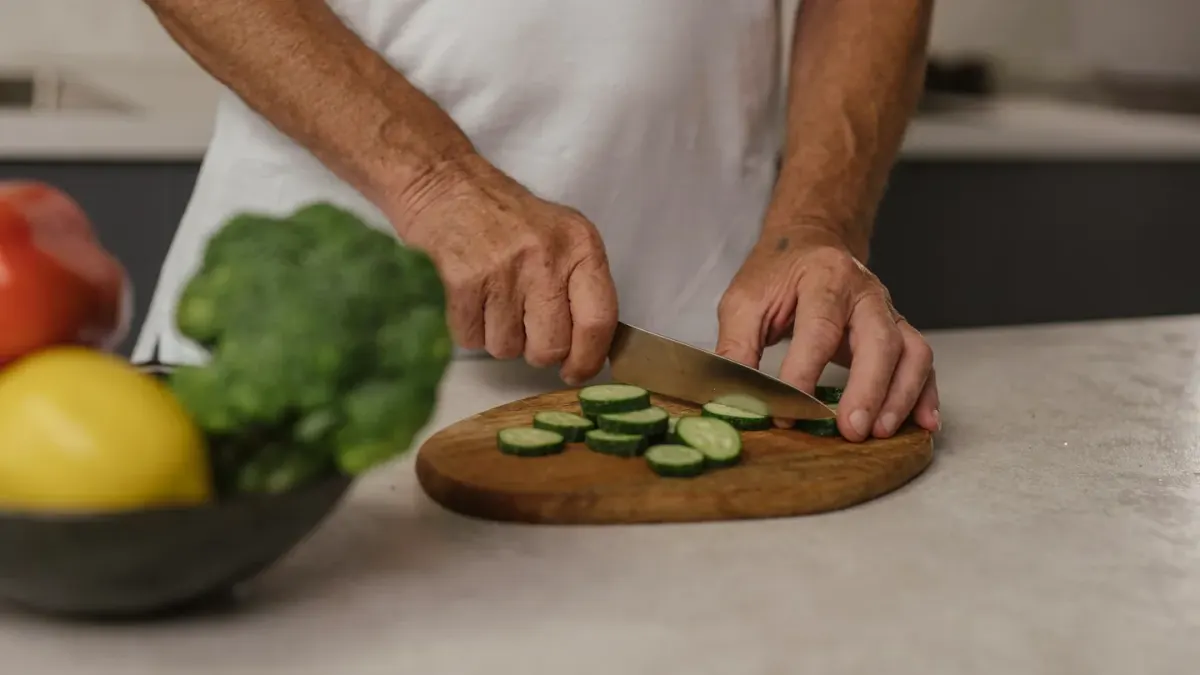
Picture a kitchen counter mid dinner-prep, a cutting board scattered with broccoli crowns, and a Lab mix sitting at perfect attention just below the edge, waiting on whatever falls. The owner tosses down a floret almost reflexively, because that’s what the video said to do — some thirty-second clip insisting broccoli is a superfood that fights cancer and shouldn’t be rationed. The dog eats it fine. Three more florets follow over the next twenty minutes, then a piece of stalk. By bedtime there’s gas thick enough to clear a room, and a loose stool waits by morning. Nothing dangerous happened here. But nothing about the video prepared this owner for how fast “healthy vegetable” turns into “why does my dog smell like this,” and that gap is exactly what this piece exists to close.
Broccoli isn’t the problem. Volume is.

What Broccoli Actually Puts in the Bowl
Floret for floret, broccoli is low-calorie, high in fiber, and carries vitamin C and vitamin K, none of which is controversial. It also contains a sulforaphane precursor, the same compound behind broccoli’s reputation as a human cancer-prevention food, though that human research doesn’t translate into a dosing recommendation for dogs, and no one’s run the canine trial that would let it. In traditional Chinese veterinary food therapy, a framework I still reach for alongside the imaging and the enzyme panels, broccoli is classified as a cooling, slightly bitter vegetable — food-as-therapy language for a dog running warm or inflamed, not a cure for anything. That’s a useful lens, not a replacement for the biochemistry underneath it. If you’ve already worked through sweet potato as a trend-vegetable, broccoli sits in a similar category: genuinely fine in the right amount, genuinely capable of backfiring in the wrong one.
The Isothiocyanate Problem Nobody’s Filming
The florets are where the trouble concentrates. According to American Kennel Club chief veterinary officer Dr. Jerry Klein, broccoli florets “contain isothiocyanates, which can cause mild-to-potentially-severe gastric irritation in some dogs.” That’s not a toxin in the poison-control sense. It’s a compound that some dogs’ GI tracts simply don’t love in quantity, and the symptoms — gas, cramping, loose stool — are the ones that never make it into the trending clip. PetMD describes the same mechanism, noting the compound is thought to help prevent cancer in other contexts but “can also cause gastric irritation in dogs.” Stalks are lower in isothiocyanates but bring a different failure mode: Dr. Klein warns that broccoli stalks “can cause esophageal obstruction, especially in small dogs,” which is a mechanical risk, not a chemical one, and it’s the reason prep matters as much as the serving size.
Ten Percent, Not Zero: The Rule I Actually Use
Here’s the decisive part. The guideline I actually hold owners to, sourced from the American Kennel Club, is that broccoli should stay under 10% of a dog’s daily intake, with amounts approaching 25% considered risky. In practice that’s a floret or two for a small dog, more for a large one, offered as an occasional add-in rather than a daily habit. Cooked, plain, and cut small beats raw and chunky on every count — easier to chew, easier to digest, lower choking risk. If your dog already runs sensitive to dietary fiber shifts, it’s worth reading Can You Give a Dog Too Much Fiber? before adding broccoli on top of anything else new.
Where the Hype Runs Past the Evidence
Consider a ten-year-old dog with a history of pancreatitis, offered a “gut health” smoothie recipe circulating online that leans heavily on raw broccoli and other cruciferous vegetables for their sulforaphane content. The counterargument I hear most is some version of “it’s a superfood, more must be better.” I don’t buy it, and here’s why: the human sulforaphane research this claim borrows from was never dosed for a 40-pound dog with a fragile pancreas, and volume is exactly what that dog’s diet is built to avoid. Pancreatitis and exocrine pancreatic insufficiency are managed with low-residue, moderate-fat nutrition, since JAVMA notes that “EPI is treated by pancreatic enzyme replacement therapy, nutritional management (low-residue diets with moderate fat content), and supplementation of cobalamin.” Stacking fibrous vegetables on top of that plan works against it, not with it. The same review is candid about the limits of current knowledge, adding that “future studies are needed to further understand the causes of persistent dysbiosis in animals with EPI following initiation of pancreatic enzyme replacement therapy.” That honesty is worth more to me than a viral claim that never cites a dose.
Even outside those conditions, gut response isn’t uniform. A recent trial in Frontiers in Veterinary Science on probiotic response in dogs found that “diversity metrics did not distinguish non-responders from responders” — a reminder that two dogs can eat the same vegetable and land in very different places digestively. That’s part of why I’d rather test a small amount and watch than assume every dog tolerates broccoli identically. If you’re already tracking gut health more broadly, our probiotic guide covers what the evidence actually supports there.
The Verdict
Yes, dogs can eat broccoli, and no, it isn’t secretly dangerous the way some comment sections make it sound. Keep it cooked, plain, floret-heavy, and under roughly 10% of daily intake, and most healthy dogs handle it without issue. Skip it, or keep the portion token-small, for dogs managing pancreatitis, EPI, or a history of GI sensitivity, since that’s where the nutritional management evidence actually points. Start with one small piece, watch the next twenty-four hours, and adjust from there — that’s the practical next step, not another trend to chase past what the data supports.
Frequently asked questions
Can dogs eat broccoli raw or does it need to be cooked?
Both raw and cooked broccoli are generally fine, but lightly steamed florets are easier to chew and digest than raw, tougher stalk pieces, and cooking doesn't meaningfully increase risk.
How much broccoli can a dog safely eat?
The widely cited guideline from the American Kennel Club is to keep broccoli under 10% of a dog's daily food intake, with amounts approaching 25% considered risky. In practice that's a floret or two for a small dog and a small handful for a large one, offered occasionally rather than daily.
Why does broccoli give my dog gas?
Broccoli's fiber and sulfur compounds ferment in the colon, and the isothiocyanates concentrated in the florets can irritate the GI tract in some dogs, both of which show up as gas or loose stool when a dog eats more than a small amount.
Are broccoli stalks safe for dogs?
Stalks aren't toxic, but they're fibrous, harder to chew, and a documented choking or obstruction risk, especially in small dogs, so cut them into small, soft pieces or skip them in favor of florets.
Sources
- Can Dogs Eat Broccoli? — American Kennel Club
- Can Dogs Eat Broccoli? — PetMD
- Exocrine Pancreatic Insufficiency: Enzyme Therapy, Diet, and Open Questions on Dysbiosis — JAVMA
- Probiotic Response and Gut Microbiome Diversity in Dogs — Frontiers in Veterinary Science