What Is Shaping in Dog Training? The Method Behind the Viral "Wait For It" Clips
Shaping isn't a TikTok trick — it's operant conditioning with a clicker, and it's one of the more evidence-backed ways to build a dog's problem-solving skill.
On this page
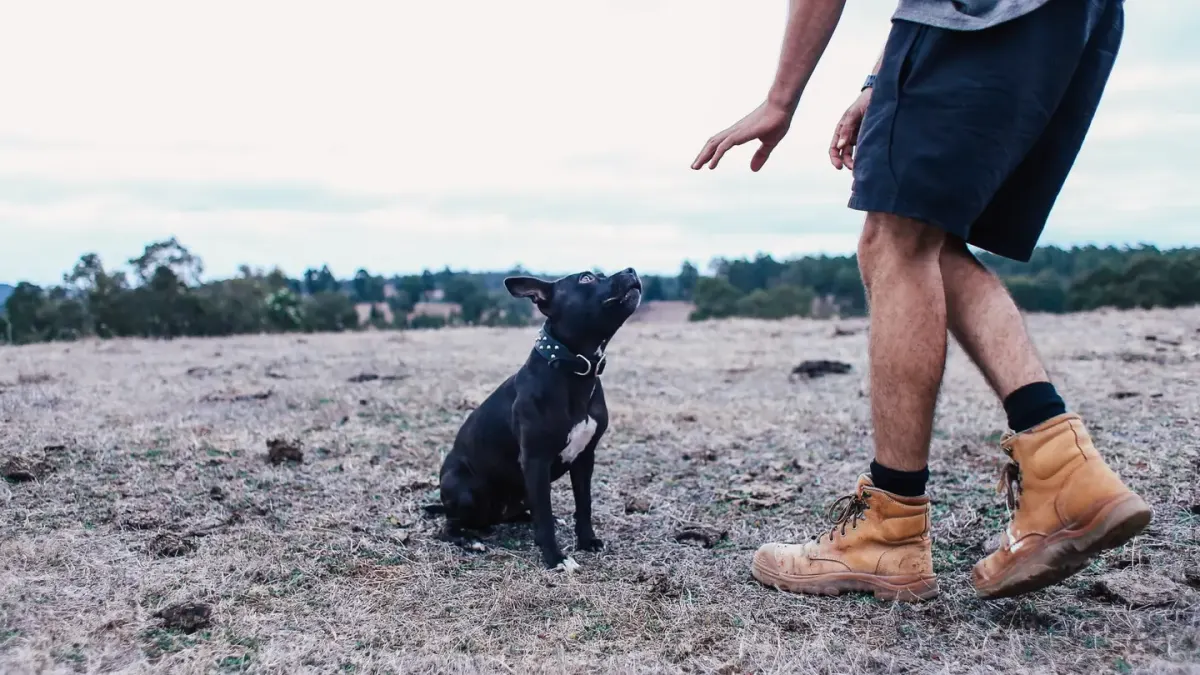
You’ve probably seen the clip: a dog just… figures it out. No leash pop, no luring with a treat glued to its nose, no verbal cue at all. The handler stands there clicking a small plastic device every few seconds while the dog experiments — paw here, nose there — until suddenly the dog is spinning in a full circle or pushing a button on the floor. The caption says “shaping” and the comments fill up with “wait, so you’re not even telling the dog what to do?” That’s the fork worth settling: is shaping actually a real training method, or is it just clicker theater that looks impressive on camera and does nothing you couldn’t get from a treat lure in half the time?
What shaping actually is
Shaping is differential reinforcement of successive approximations — you reward the dog for movements that are closer and closer to the final behavior, rather than waiting for the whole behavior to appear on its own. If you want a dog to push a button with its paw, you don’t wait for a full paw-press. You mark and reward the dog for glancing at the button, then for stepping toward it, then for touching it with a nose, then a paw, then an actual press. Each rewarded step raises the bar slightly. The American Veterinary Society of Animal Behavior describes reward-based training broadly as reinforcing wanted behavior and removing reinforcement for unwanted behavior — shaping is simply that principle applied in very small increments instead of big jumps.
The mechanism traces back to operant conditioning, and shaping through successive approximations has been a foundational procedure in behavior training since B.F. Skinner’s original work with animals. What’s changed since then is how it’s applied in pet dog training specifically, usually paired with a clicker or a verbal marker to pinpoint the exact instant a rewarded movement happens.
Shaping vs. luring: what actually differs
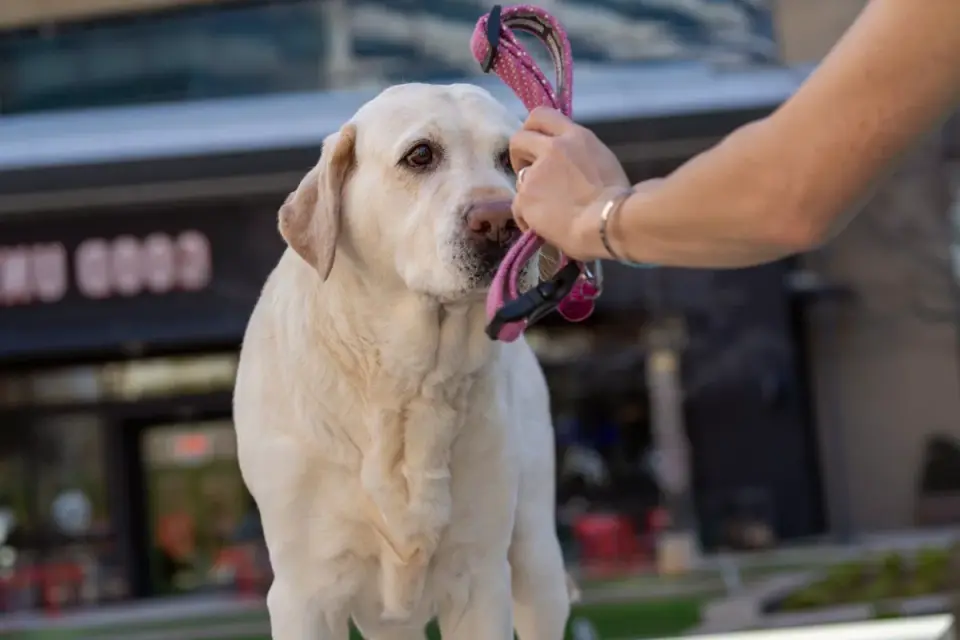
Luring is faster to start. You hold a treat, move it over the dog’s head, the dog’s rear drops, you say “sit,” done — most dogs get it in a handful of reps. Shaping takes longer to set up because you’re building the behavior from scratch instead of showing the dog what you want. But the payoff is different too. A lured dog is following a hand. A shaped dog has been rewarded for experimenting, offering behavior, and adjusting based on outcome — which is exactly why shaping shows up so often in the context of problem-solving and enrichment, not just party tricks.
I’ve watched this play out with a twelve-week-old mini Aussie named Piper whose owner brought her in mostly worried about destructive chewing — she’d gone through two remote controls and a shoe in about ten days. Piper was smart, understimulated, and had never been asked to think for a reward; every “sit” and “down” had been lured with a treat held right at her nose. We spent one visit teaching her to shape a simple nose-touch to a sticky note taped to the wall, five-minute sessions, twice a day. Within about two weeks her owner reported Piper was offering behaviors unprompted — nudging toys toward her, sitting to “ask” for things — and the chewing dropped off almost as a side effect. The dog wasn’t just calmer; she’d learned that trying things pays off, which is a different lesson than sit-means-treat.
Research backs the distinction between these teaching methods in a practical way. A ScienceDirect: study on clicker and shaping methods in companion dogs compared shaping/clicker training against another social-learning method and found real differences in how efficiently dogs acquired new behaviors depending on the training approach used — which tells us the method itself matters, not just the treats behind it.
Where shaping wins — and where it doesn’t
Shaping earns its keep on behaviors that are hard to lure or force: pushing a button, holding a stay at a distance, targeting an object precisely, or building a dog’s general willingness to try things without being shown. It’s also genuinely useful for nervous or shutdown dogs, because a dog that’s rewarded for tiny, low-pressure attempts is building confidence alongside the behavior, not just compliance.
Where it falls short is speed and simplicity. If you need a reliable “sit” by Friday for a vet visit, luring or even a physical prompt will get you there faster with a typical pet dog. Shaping also asks more of the handler — your timing has to be sharp, and you need to recognize and reward tiny increments of progress, which takes practice most owners haven’t built yet. A poorly timed marker during shaping teaches the dog something, just maybe not the something you intended.
The AAHA Canine Life Stage Guidelines note that addressing behavior at every life stage matters for welfare, not just obedience — and shaping fits that lens well because it’s inherently reward-based and low-stress when it’s done right, which lines up with what the field increasingly recommends over aversive correction-based methods.
The case I still think about
A few years back I worked with an eight-year-old Lab mix, Bruno, who’d developed a habit of guarding his food bowl — not full aggression, but a stiff body and a hard stare the second anyone walked near the kitchen while he ate. His owners had tried moving his bowl, tried treats tossed near him, and the behavior hadn’t budged in months. We used shaping to build a completely different association: rewarding Bruno for voluntarily backing off the bowl a few inches when a person entered the room, starting with rewarding him for the smallest weight shift away from the dish. It took about three weeks of short, twice-daily sessions before he was reliably stepping back on his own, well before anyone got close. What made it work wasn’t a single big correction — it was dozens of tiny, rewarded choices that added up to a dog who’d learned that people near his food meant something good was coming, not a threat to defend against.
Do you need a clicker, or will a marker word work?
Either can work — what matters is consistency and timing, not the tool itself. If you’re new to shaping, our guide on clicker vs. verbal marker word breaks down which one trains faster for different owners and behaviors. Whatever you pick, pair it early with a treat pouch so reward delivery is fast enough that the timing doesn’t fall apart mid-session.
Shaping also works well as a bridge behavior for dogs still building foundational skills — it pairs naturally with teaching a solid shake or reinforcing a reliable recall, since both benefit from a dog that’s used to offering behavior rather than waiting to be told.
My verdict
Shaping isn’t hype and it isn’t magic — it’s a slower, more deliberate application of the same reward-based principles that already underpin good dog training, and the research on clicker and shaping methods backs up that the technique itself changes how efficiently dogs learn. I don’t reach for it with every client on day one, because it takes handler skill that most owners haven’t built yet and a lured “sit” will still get most families through their first week faster. But for problem-solving, confidence-building, and behaviors that resist a lure entirely, it’s worth the slower start. If your dog already offers behavior easily — noses things, paws at stuff, experiments — you likely have a dog that’s going to take to shaping quickly, and it’s worth trying before you assume you need a stronger correction to fix a “stubborn” dog.
Frequently asked questions
Is shaping the same thing as clicker training?
Not quite. Clicker training is a tool — a marker that pinpoints the exact moment a behavior earns a reward. Shaping is the strategy of rewarding small successive steps toward a bigger behavior. You can shape a behavior with a clicker, a verbal marker, or even just fast treat delivery; the clicker just makes the timing more precise.
How long does it take to shape a new behavior?
It varies a lot by dog and behavior, but most simple shaped behaviors (a nose touch, a paw target) take multiple short sessions across one to two weeks of daily practice. Complex chains take longer.
Can any dog learn through shaping, or does it require a certain temperament?
Most dogs can learn through shaping, but dogs that are naturally more exploratory or food-motivated tend to pick it up faster. Nervous dogs can still shape successfully — it's often lower-pressure than luring — but sessions may need to be shorter and more patient.
Sources
- What are Reward-Based Training Methods for Dogs (and Cats)? — American Veterinary Society of Animal Behavior
- Social learning in dog training: The effectiveness of the Do as I do method compared to shaping/clicker training — ScienceDirect
- Behavior — AAHA Canine Life Stage Guidelines