How to Teach a Dog to Shake: The Method That Actually Sticks
The fastest way to teach a dog to shake is to reward the natural paw-lift, not force the paw into your hand.
On this page
Here’s the fork every owner hits about ten minutes into trying to teach shake: do you pick up the paw yourself, or do you wait for the dog to offer it? Half of TikTok is doing the first one — grabbing the paw, saying “shake,” handing over a treat — and it usually stalls out by day three. The dog either yanks the paw back or just stares at you, waiting for you to do the work again. The second method takes a little more patience up front and works a lot better long-term, and that’s the whole verdict in one line.
In my practice, I see this trick come up constantly in puppy consults, usually because a client watched a video where a Golden Retriever shakes on command in fifteen seconds and wants to know why their eight-month-old Beagle mix won’t. One family I worked with had a eleven-pound terrier mix, about a year old, who’d yank his paw away the second they touched it — turned out he’d had a nail-trim injury as a puppy and associated any hand near his foot with something unpleasant. We dropped the “physically lift the paw” approach entirely and started from a dog that was already comfortable sitting calmly, rewarding the tiny natural weight-shift onto three legs before he ever lifted anything. It took about two weeks of five-minute sessions before he’d offer the paw on his own, but once he did, “shake” became one of his most reliable cues — because he’d built it himself instead of having it done to him.
Why the tickle-the-paw trend gets half credit
The version that keeps circulating — tickle the paw, dog lifts it, mark and reward — is American Kennel Club: described in AKC’s clicker training guide as a legitimate shaping method, and it’s not wrong. The mechanism underneath it is real operant conditioning: the dog’s paw-lift is the voluntary behavior, the click or “yes” marks the exact instant it happens, and the treat reinforces it so the behavior gets more likely to repeat. Where the trend goes sideways is in dogs who don’t like their paws handled at all. For a dog with any foot sensitivity — from nail trims, from an old injury, from just being a breed that doesn’t love being touched below the elbow — a tickle reads as an aversive, not a cue, and you end up training avoidance instead of a trick.
The American Veterinary Society of Animal Behavior’s position on humane dog training is blunt about this: reward-based methods that reinforce the behavior you want outperform methods that rely on physically manipulating the animal, and any approach that risks even mild discomfort should be dropped in favor of one that doesn’t. That’s the whole argument for skipping the tickle and going straight to reward-and-shape.
Building the behavior instead of handing it over
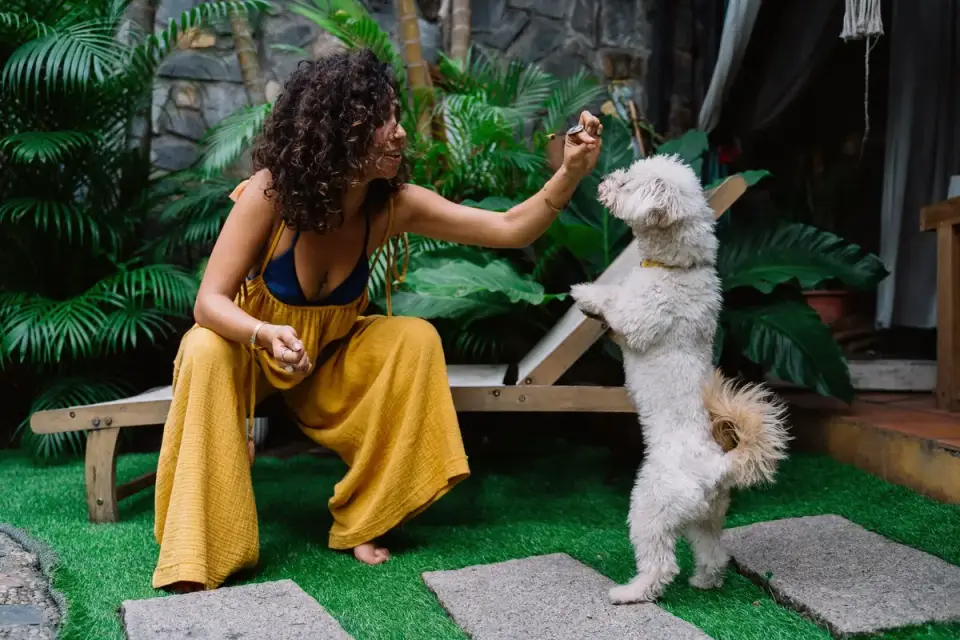
Start with your dog in a solid sit. Hold a small treat in a closed fist near the floor, roughly where a raised paw would land. Most dogs will paw at your hand out of frustration within the first ten to twenty seconds — the instant that paw lifts even an inch, mark it and deliver the treat. You’re not asking for a full shake yet. You’re rewarding the raw material: a paw coming off the ground.
Repeat that for five or six short sessions — a couple of minutes each, not one long slog — before you add the word “shake.” Once the paw-lift is happening reliably, say the cue right as the behavior starts, not before. Dogs learn the association backward from where owners expect: the word means something only after it’s been paired with the action dozens of times, not the other way around. This is essentially the same shaping logic covered in a broader Whole Dog Journal: clicker training and trick training approach — mark the behavior close to the source, then layer language on top of an action that already exists.
From there, start extending your open hand slightly further from the dog’s body so the “shake” starts to look like an actual handshake rather than a paw stuck out at the floor. Fade the treat lure gradually — reward every rep for the first week, then every other rep, then only the cleanest ones. If your dog stalls at any point, back up a step rather than repeating the same cue louder. That’s usually a sign the last step was too big a jump, not that the dog isn’t smart enough.
When it doesn’t click, and what that usually means
Some dogs never warm up to paw handling, and that’s worth respecting rather than pushing through. If your dog consistently pulls away, freezes, or shows whale-eye when you reach toward a paw, that’s not stubbornness — treat it the way you’d treat any other handling sensitivity and build tolerance gradually with counterconditioning before you go back to the trick itself. A dog who’s anxious about foot contact for medical reasons — arthritis, an old injury, healing nails — needs that addressed before shake training makes sense at all; our guide on arthritis vs. normal aging stiffness in dogs walks through how to tell the difference if an older dog suddenly won’t offer a paw they used to give freely.
One mid-body reality check I give owners: this is one of the slower “easy” tricks, not one of the fast ones, whatever the fifteen-second videos suggest. Sit and down usually land inside a session or two because the dog’s whole body naturally settles into the position you’re marking. Shake asks for a much more specific, less natural movement — a foot coming off the ground while the rest of the body stays still — and that precision takes more reps to lock in. I tell clients to expect one to three weeks of short daily sessions for a clean, reliable shake, not one afternoon.
The timing question comes up constantly with puppies too, and it overlaps more than people expect with the general timing logic in a puppy potty-training schedule that works — short, frequent, low-pressure reps beat long sessions for almost every early skill, shake included. And if you’re debating whether to mark the paw-lift with a click or just a verbal “yes,” the tradeoffs are the same ones covered in clicker vs. verbal marker word: a clicker is a slightly cleaner, more consistent signal, but a marker word is nearly as effective once you’re consistent with it, and it doesn’t require carrying a device around the house.
The dog I still think about was a rescue mix, roughly two years old, who’d clearly been taught shake at some point by force — she’d offer the paw the instant anyone reached toward her feet, even outside of training, almost defensively. Her owner didn’t want to reinforce that anxious version of the behavior, so we retired the old cue entirely and rebuilt a new one, a fist-tap instead of an open palm, over about a month of patient, low-pressure sessions. By the time she trusted the new cue, she’d offer the paw loosely, tail relaxed, waiting for the mark — a completely different dog doing what looked like the same trick. That case is why I push back hard on the grab-the-paw method with every client who asks about it now: you can’t always tell from the outside whether a fast “shake” was built on comfort or on avoidance, and only one of those holds up.
The verdict
Shake is a fun, low-stakes trick to teach, and it’s a genuinely good one to start with because it teaches your dog — and you — the core mechanics of shaping: reward the piece of the behavior you already have, mark the instant it happens, and build outward from there. Skip the tickle-and-lift shortcut if your dog shows any paw sensitivity, expect it to take longer than the viral clips suggest, and if a supposedly trained dog offers a paw with a stiff body or a tucked tail, that’s not a finished trick — it’s a dog who learned to comply, not to enjoy it. Reward-based shaping gets you both.
Frequently asked questions
How long does it take to teach a dog to shake?
Most dogs need one to three weeks of short, daily sessions to shake reliably on cue, though some pick it up faster and dogs with paw sensitivity may take longer.
Should I physically lift my dog's paw to teach shake?
It's better to wait for and reward the natural paw-lift than to physically move the paw yourself, especially for dogs who are sensitive about their feet being handled.
What if my dog won't let me touch its paws at all?
Treat that as a handling sensitivity to work through with gradual counterconditioning before attempting the shake trick, and rule out a medical cause like arthritis or an old injury.
Sources
- Why You Need To Reward Your Dog in Training, According to the Experts — American Veterinary Society of Animal Behavior
- Clicker Training: Mark & Reward Dog Training Using Clickers — American Kennel Club
- Clicker Training and Trick Training Your Dog — Whole Dog Journal