How to Keep a Dog Calm During a Vaccine Shot or Blood Draw
Medically reviewed by Tia Perry, DVM, CVCH, CERPV, CVMMP, CVFT, CTPEP, CVA, MSIVM-C, MSIVM-E, MSTCVM — For general education — not a substitute for veterinary care.
Here's how to keep a dog calm during a vaccine shot or blood draw, from carrier prep to distraction techniques.
On this page
Here’s how to keep a dog calm during a vaccine shot or blood draw: it comes down to a short list of things you control before the needle ever comes out.
Quick checklist for the appointment:
- Bring a familiar towel, mat, or blanket that smells like home for your dog to stand or sit on.
- Skip the waiting-room floor if your dog is reactive to other animals; ask to wait in the car or a quiet corner.
- Pack a soft, high-value treat that can be smeared or licked slowly, not just tossed and gulped.
- Ask the tech to use a “less is more” hold — light contact, no full-body pin, unless your dog actually needs it.
- Keep your own voice low and ordinary; dogs pick up on a handler’s own tension fast.
- If your dog has a history of fear at the vet, ask ahead of time whether the clinic can schedule extra time or a fear-free approach.
Each of those does more work than people expect, and none of it requires a product.
Before the appointment: what actually helps in the exam room
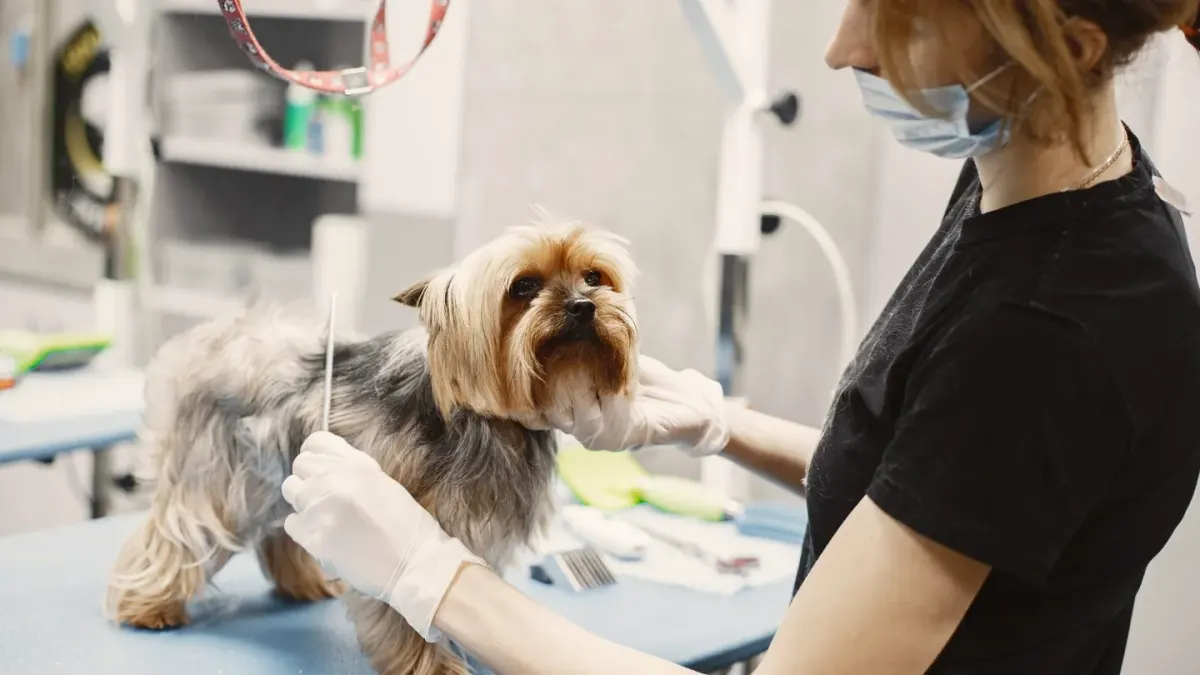
A lot of the anxiety around a shot or blood draw isn’t about the needle at all — it’s about being handled by a stranger on an unfamiliar table. Dogs that are gently desensitized to paws, ears, and gums being touched at home tend to tolerate clinic handling better, because the sensation isn’t novel. If your dog already startles at nail trims or ear checks, that’s worth working on between visits, not the morning of.
A short car ride and a few minutes to settle in the parking lot before walking in also helps more than it sounds like it should; arriving rushed and dragged straight from the car into an exam room stacks stress on stress. If your dog gets carsick or anxious just from the drive itself, that’s a separate problem worth untangling — see our guide on why a dog vomits every time it goes for a car ride if that sounds familiar.
During the vaccine or blood draw: hands, voice, and distraction
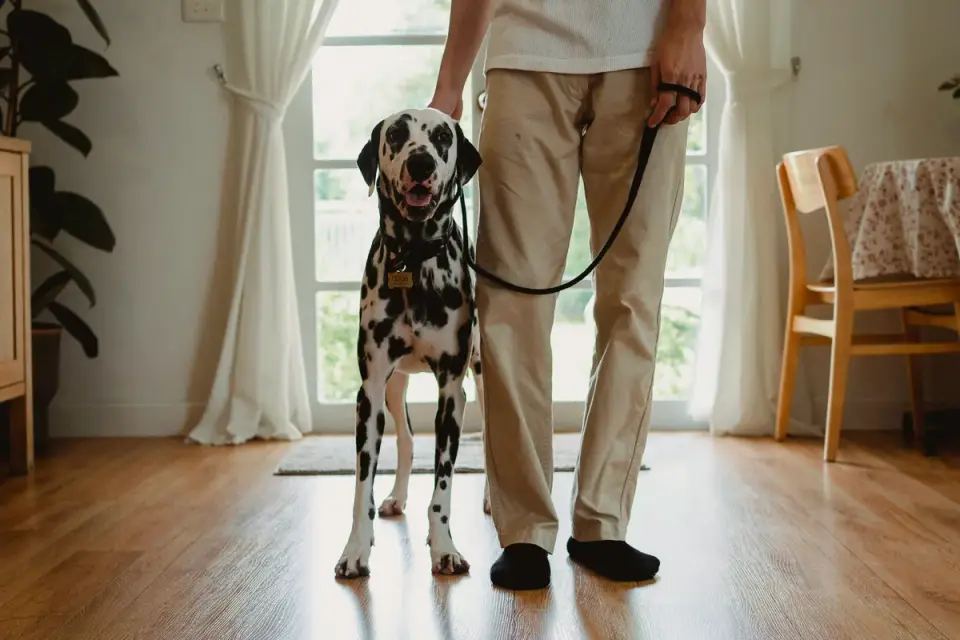
Once you’re in the room, positioning matters as much as anything a supplement could do. A dog standing on a non-slip mat, with a handler cradling the head and chest rather than pinning the whole body, generally settles faster than one restrained flat on a slick table. Vets and techs trained in fear-free handling will often work with the dog’s posture instead of against it — letting a nervous dog stand rather than forcing a lie-down, for instance.
Food is the other lever. A lick mat or a smear of something soft on a spoon, held steady during the actual stick, gives the dog a job besides worrying about the needle. Timing the poke to the middle of a good lick, when a dog is mid-swallow and least tensed, is a technique many fear-free clinics use on purpose.
Your own behavior counts too. Dogs read handler tension through leash pressure, breath, and voice pitch, so narrating calmly in an ordinary tone works better than baby talk or over-praising, both of which can read as “something is wrong” to a dog already on alert.
Calming ingredients worth knowing about
Some owners look to calming chews or drops ahead of a stressful appointment, and a few ingredients have real research behind general stress support, even if the evidence in dogs specifically is thinner than in humans. A review in Biomedicines notes that for chamomile, “for the remaining species, evidence is derived mainly from preclinical studies or traditional use.” KSM-66 ashwagandha has more human clinical backing: a systematic review in Cureus concluded the ingredient “has a moderate positive impact on stress reduction and cognitive performance.” L-theanine research is more mixed — a review in Molecular Psychiatry found meaningful effects in some human trials but not universally, noting benefit “except for one study on psychotic anxiety (SMD = 0.54; 400 mg/day for 8 weeks).”
None of that means popping a chew an hour before the appointment guarantees a calm dog. It means these ingredients have a real, if still developing, evidence base worth discussing with your vet — particularly around timing and whether they’re appropriate alongside whatever else is happening at that visit. If you’re trying to figure out whether your dog’s anxiety runs deep enough to warrant a supplement conversation at all, our signs your dog needs a calming supplement Q&A walks through that decision, and the chamomile vs. L-tryptophan comparison digs deeper into how those two specific ingredients differ.
Reading the early signs of stress
Growling and struggling are late-stage signals. Earlier ones are easier to miss: whale eye (showing the whites), repeated lip licking with no food around, a tucked tail, or a dog that goes completely still and stops taking treats it would normally grab. A dog that stops eating mid-visit is telling you it’s over threshold, not being picky.
If your dog shows those signs consistently, it’s worth asking the clinic directly whether they offer fear-free scheduling, a quiet-hours slot, or a tech experienced with anxious dogs. Most clinics have some version of this even if it isn’t advertised.
After the draw
Once the shot or blood draw is done, a few minutes of calm before heading back into a busy waiting room helps a dog’s nervous system come down rather than stay activated. A short, easy walk afterward — even just to the car — tends to help more than an immediate car ride home. For toy and small breeds especially, a slow decompression walk is a low-effort way to close out the visit on a better note; see our exercise ideas for toy and small breeds for gentle options that won’t overstimulate an already keyed-up dog.
The next appointment goes easier when this one ends calm. That’s the real payoff of doing the small things right today.
Frequently asked questions
Should I give my dog a calming chew before a vaccine appointment?
Some owners give a calming chew an hour or so before the appointment, and ingredients like L-theanine and KSM-66 ashwagandha have research behind general stress reduction. But timing, dose, and whether it's appropriate for your dog's health history should go through your vet first, especially if bloodwork is also planned.
Why does my dog shake or pant during a blood draw even if it doesn't hurt much?
Restraint itself, not just the needle, is often the trigger. Being held still on an unfamiliar table activates the same stress response as any perceived threat, which is why body positioning and a calm handler matter as much as the poke.
Is it okay to feed treats during the blood draw itself?
In most fear-free-style clinics, yes. A smear of a soft, high-value treat during the draw gives the dog something to focus on besides the needle, and many vet techs will time the stick to the licking.
Sources
- Chamomile and Anxiety & Stress: A Review — Biomedicines
- Systematic Review of Ashwagandha for Stress Reduction and Cognitive Performance — Cureus
- L-Theanine and Anxiety: A Systematic Review — Molecular Psychiatry