How Barometric Pressure Drops Affect a Dog's Joint Pain
Medically reviewed by Jessica Ennis, DVM, CVA — For general education — not a substitute for veterinary care.
Barometric pressure drops before a storm can affect a dog's arthritic joints, triggering stiffness and pain.
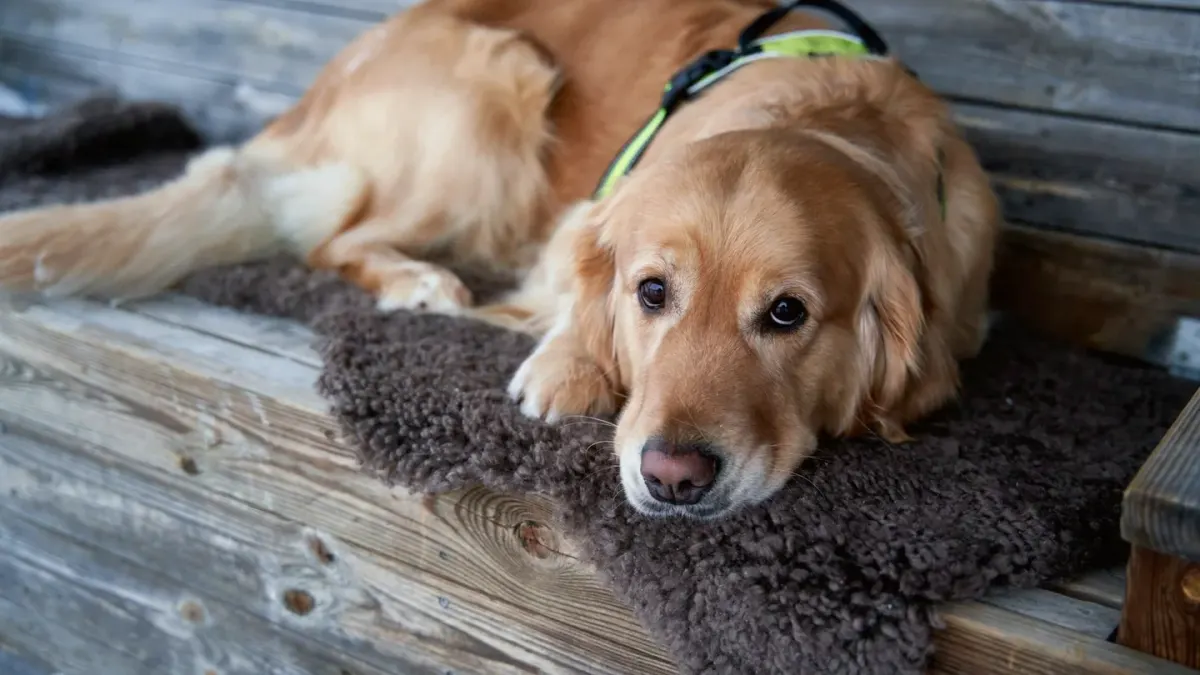
On this page
Ruth noticed it the way a lot of owners do: her twelve-year-old Lab mix, Biscuit, would go from happily trotting to the mailbox to refusing the porch steps, and it always seemed to happen the evening before a storm. No thunder yet. No rain. Just a gray sky and a dog who suddenly moved like he’d aged five years overnight. By the time the first drops actually fell, he’d usually loosened back up a little, as if the worst of it had already passed.
That timing isn’t a coincidence, and it isn’t just a dog-owner superstition either.
What barometric pressure actually does to a joint
Barometric pressure is the weight of the air pressing down on everything, including the tissue around a joint. In a healthy joint, that pressure is balanced on both sides of the capsule. In an arthritic one, where cartilage has thinned and the synovial lining is already inflamed, the balance is more fragile. When atmospheric pressure drops ahead of an approaching front, the relative pressure inside the joint capsule goes up compared to the air outside it. That shift can allow tissues and fluid to expand slightly, which stretches an already-sensitized joint capsule and stimulates the nerve endings living in it. The result, in a joint that was already inflamed, is more pain signaling, often hours before a person would notice any weather change at all.
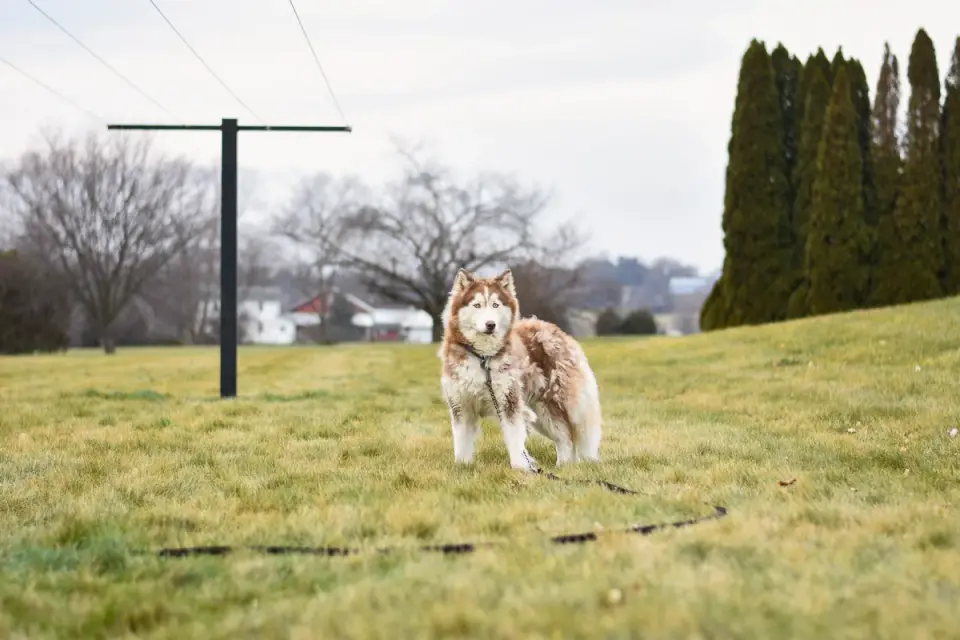
High-pressure days versus the hours before a front rolls in
On a stable high-pressure day, most dogs with mild to moderate arthritis move close to their baseline: a little morning stiffness, then loosening up on the first walk. Compare that to the twelve or so hours before a front arrives, when pressure is actively falling. That’s when owners describe the clearest change: slower to rise from a nap, reluctant on stairs, more reactive when a joint is touched. Once the front actually passes and pressure stabilizes again, even at a lower reading, many dogs settle back toward normal within a day. It’s the drop itself, more than the absolute pressure number, that seems to matter most.
This pattern lines up with what’s documented in people with osteoarthritis, where pressure changes are a well-established, if individually variable, pain trigger. The veterinary evidence is thinner and mostly built on owner-reported patterns rather than controlled trials, so it’s fair to call this a plausible, widely observed phenomenon rather than a settled clinical fact.
What owners notice, and what’s just anecdote
Not every dog reacts, and among those that do, the timing and intensity vary a lot. Some dogs telegraph a storm a full day out. Others only stiffen once the rain is already falling, which is more likely tied to cold and dampness than to pressure itself. Reading too much into a single stiff evening isn’t useful. A pattern that repeats across several storms, especially one that tracks a forecast better than it tracks the actual weather outside the window, is the stronger signal that pressure sensitivity is genuinely part of the picture.
Structure and function support between fronts
There’s no supplement or medication that blocks a pressure drop from happening. What preventive-minded joint care can do is keep the joint itself in a better starting position before that pressure shift arrives. Glucosamine and chondroitin are among the most studied joint-support ingredients for dogs, and each plays a different role: research in Frontiers in Veterinary Science describes chondroitin as supporting healthy synovial fluid homeostasis, while a review in the Journal of Veterinary Medical Science found glucosamine HCl may help prevent experimentally induced cartilage degradation in vitro. Green-lipped mussel has also been studied for inflammation: a paper in Nutrients found extracts alleviated paw swelling in rats and reduced pro-inflammatory cytokines including TNF-α and IL-17. None of that amounts to a same-day fix for a stormy Tuesday. It’s a case for daily consistency, the kind that lowers the baseline level of joint inflammation so a pressure swing has less to work with. If you’re comparing how hyaluronic acid stacks up against those better-studied ingredients, it’s worth reading before adding anything new to a senior dog’s routine.
When it’s more than weather
A weather-linked stiffness pattern is common enough that it’s rarely, on its own, a reason to worry. It becomes worth a vet visit when the stiff days start outnumbering the good ones, when a dog stops wanting to do stairs even on calm afternoons, or when the recovery after a storm takes longer than it used to. That trajectory, not any single gray sky, is the thing to track. Gut health and diet also shape how a dog handles inflammation generally, which is part of why some owners pair joint support with a probiotic routine worth vetting rather than treating joints in isolation.
Biscuit still gets stiff the night before a storm. Ruth just stopped panicking about it, and started treating the pattern as information instead of an emergency: tracking it, mentioning it at wellness visits, and keeping his daily joint routine steady whether the forecast looks calm or not.
Frequently asked questions
Can dogs really feel a storm coming through joint pain?
Many owners report it, and the mechanism is plausible: a drop in barometric pressure changes the pressure gradient across an arthritic joint capsule, which can increase swelling and nerve sensitivity before rain or thunder ever arrives.
How long before a storm does a dog usually get stiffer?
Anecdotally, six to twelve hours before visible weather changes, tracking the pressure drop itself rather than the rain or thunder.
Do joint supplements help on weather-sensitive days?
Glucosamine and chondroitin are among the most studied joint-support ingredients for dogs, and they work best as part of a daily baseline rather than something started only on stormy days.
Should I take my dog to the vet if stiffness only shows up before storms?
A pattern tied to weather is worth mentioning at a wellness visit, especially if the stiffness lingers past the storm, worsens over months, or starts limiting stairs and walks.
Sources
- Chondroitin sulfate and synovial fluid homeostasis — Frontiers in Veterinary Science
- Glucosamine hydrochloride and cartilage degradation in vitro — Journal of Veterinary Medical Science
- Green-lipped mussel extract and inflammatory markers — Nutrients