At-Home Grooming vs a Professional Groomer: How to Actually Decide
Home grooming saves money and builds trust, but a professional groomer earns its keep with mats, nail-trims, and stressed dogs.

On this page
Here’s the actual decision fork: it isn’t “home grooming or professional,” it’s “which parts of grooming does this specific dog need done by someone with a table, a dryer, and training in reading stress.”
I get some version of this question almost every week in exam rooms, and I want to answer it the way I actually think about it, not the way it gets flattened into a listicle.
The short version up front: most healthy, cooperative dogs with manageable coats do fine on a home routine between occasional professional visits. Dogs with double coats prone to matting, dogs who go rigid or snap at nail trims, and dogs with skin folds or ear issues benefit from a groomer who’s trained to handle those specific problems safely.
The dog that made me stop giving a one-size answer
A few years ago I saw a two-year-old Goldendoodle named Biscuit, about 55 pounds, whose owner had been doing everything right at home — a slicker brush twice a week, a bath every few weeks, the whole routine. What she hadn’t caught was matting building up behind the ears and in the “armpits,” the spots a dog can’t easily reach and an owner can’t easily see. By the time she brought him in because he’d started flinching when she touched his side, there were mats pulled tight enough against the skin to cause a raw, inflamed patch underneath. Matted fur and tangled clumps create the kind of trapped, damp environment bacteria like, and that’s exactly the mechanism behind what we saw on Biscuit. We clipped the mats out, treated the skin, and I sent her to a professional groomer for a proper de-matting session going forward — not because she’d failed at home care, but because certain coat types need hands and tools built for that specific job.
What actually goes wrong with skipping professional visits
Matting is the big one, and it’s not just cosmetic. Dirt and oils accumulate underneath mats and the tension itself pulls and stretches the skin, which is genuinely painful before it ever looks infected. Nails are the other repeat offender — overgrown nails that touch the ground with every step change how a dog bears weight, and the skin around an overgrown or damaged nail is where infections start. PetMD notes that keeping nails trimmed so they aren’t contacting the ground is a basic prevention step, and that if you’re not confident trimming yourself, a professional can teach you the technique. That’s a reasonable middle ground: you don’t have to outsource nail care forever, but it’s fair to get a demonstration first. Our guide on how often should you trim a dog’s nails walks through the actual interval, and if the sound of the grinder itself is the sticking point, the best nail grinder for dogs breakdown covers what the tool can and can’t fix on its own.
Where a professional groomer earns the fee
A trained groomer isn’t just faster with a brush — they’re trained to notice things you might miss and to work with a dog’s stress response instead of against it. Fear Free groomer certification exists precisely because the grooming environment — loud dryers, restraint on a table, handling of sensitive areas — is genuinely overwhelming for a lot of dogs, and Fear Free trains groomers to read subtle stress signals like lip-licking or freezing and adjust technique in response, rather than pushing through. That matters clinically: a calm dog is easier to examine thoroughly, and a groomer who slows down is more likely to catch a lump, a hot spot, or an ear problem early. If your dog goes stiff, pants heavily, or tries to escape during nail trims or brushing at home, that’s a legitimate signal to bring in someone with that training rather than muscling through it session after session.
Building the actual routine that works
Short-coated, low-anxiety dogs can often live almost entirely on a home routine: weekly brushing, occasional baths, nail checks every few weeks, and a professional visit maybe once or twice a year as a tune-up. Double-coated and long-haired breeds need more frequent brushing at home between professional sessions to prevent the mats from forming in the first place — daily brushing during heavy shedding periods isn’t overkill, it’s prevention. If you’re working through a coat-blow season specifically, our piece on grooming a German Shepherd through coat blow has the week-by-week version of that. And dental care deserves its own line item here too — it’s easy to lump “grooming” together, but brushing teeth is a separate daily habit from coat care, and getting a dog used to tooth brushing is worth building early rather than outsourcing entirely.
I’ve watched owners try to save money by skipping the groomer entirely for a coat type that genuinely needs it, and I’ve also watched owners pay for full-service grooming every three weeks on a short-haired Lab who really just needed a bath and a nail trim. Neither extreme serves the dog. The honest answer costs a little more effort than a flat rule: learn your dog’s coat, watch how they respond to handling, and let those two things — not habit or guilt — decide the split.
Where I land
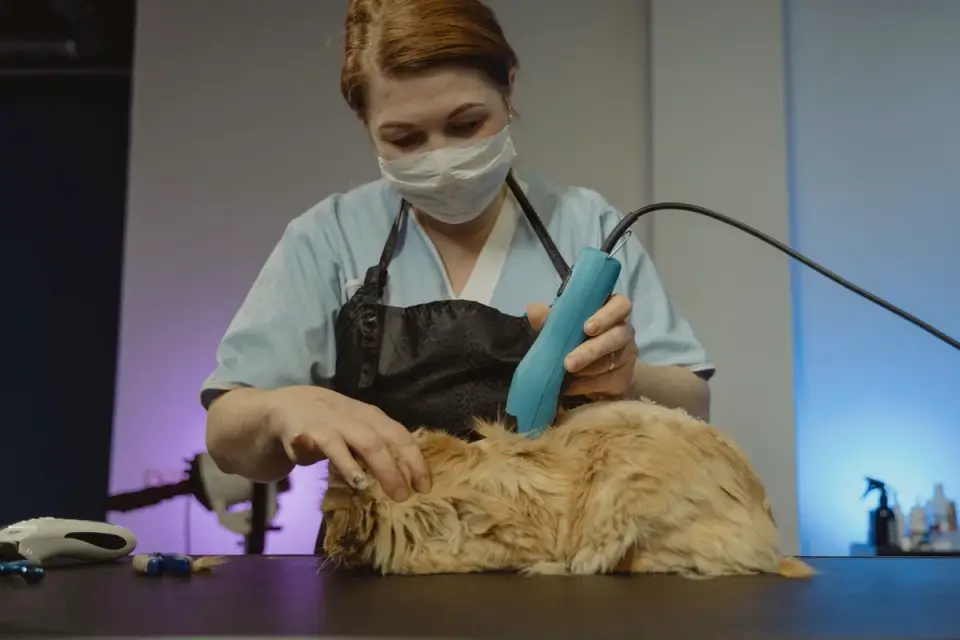
For most owners, the practical split looks like this: home care handles brushing, nail maintenance between trims, and basic bathing; a professional groomer handles de-matting, full nail trims on dogs who fight the process, and coat types — poodle mixes, double coats, long-haired breeds — that get into trouble fast without proper tools. If your dog tolerates handling well and has a low-maintenance coat, you can lean almost entirely on a home routine. If your dog has a coat prone to matting, resists nail trims, or you’ve already found a mat pulled tight against the skin the way Biscuit’s owner did, book the professional visit before it becomes a skin problem instead of a grooming appointment.
The short version: brush at home consistently, know your dog’s coat type, and don’t wait for a mat or a nail injury to bring in someone trained for it.
Frequently asked questions
Can I groom my dog entirely at home and skip the professional groomer?
For short-coated, cooperative dogs, largely yes — regular brushing, nail checks, and bathing at home can cover most needs. Dogs with double coats prone to matting, or dogs who resist nail trims, generally benefit from at least occasional professional visits.
How do I know if a mat needs a professional instead of home removal?
If a mat is pulled tight against the skin, feels warm, or the area looks red or irritated when you part the fur, don't try to cut it out yourself — see a groomer or your vet, since the skin underneath is often already inflamed.
What is Fear Free groomer certification?
It's a training program that teaches groomers to recognize subtle stress signals in dogs and adjust handling accordingly, aiming to make grooming less overwhelming and safer for anxious dogs.
Sources
- Groomer Certification Program — Fear Free
- Nail Infections in Dogs — PetMD