Best Dog Nail Grinder: What It Actually Fixes (and What It Doesn't)
A grinder solves more nail problems than clippers do, but only if you learn to use it slowly.
On this page
Here’s the fork most owners hit around the third or fourth overgrown-nail cycle: keep white-knuckling it with clippers, or spend the money on a grinder and hope the noise doesn’t send your dog under the bed. I get asked which one to buy almost every week, and my answer isn’t neutral — it’s a grinder, for most dogs, most of the time. But “most” is doing real work in that sentence, and I want to walk through why before you order anything.
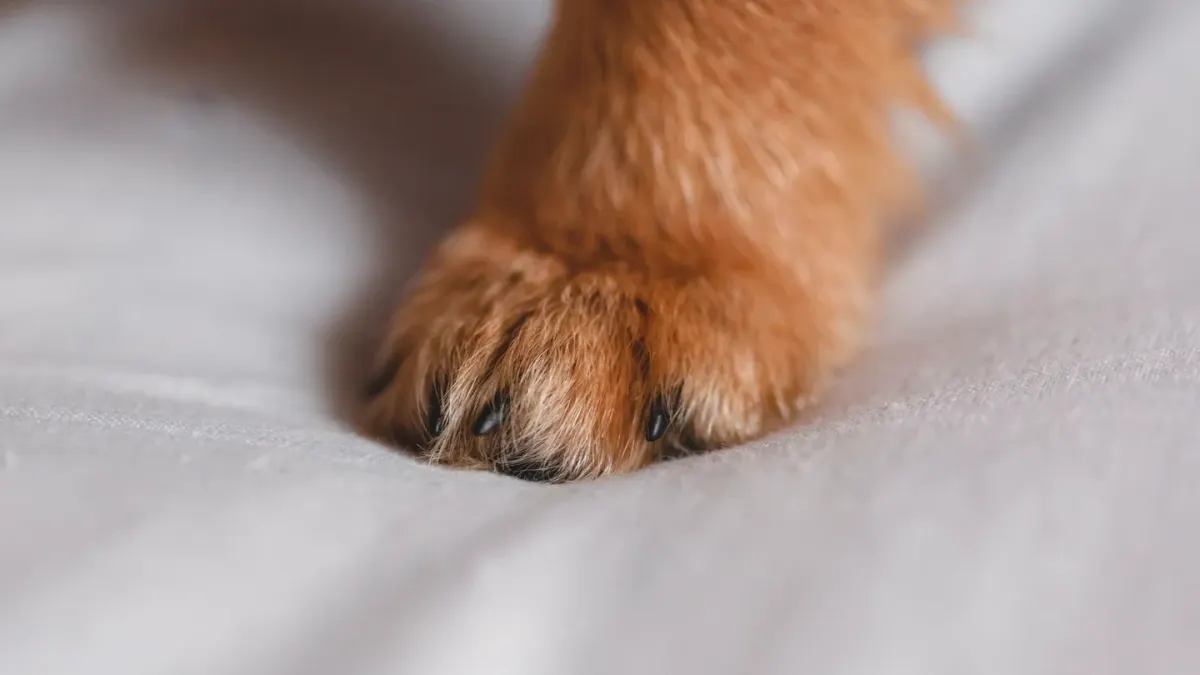
The case for a grinder comes down to how nails actually fail during a trim. A clipper takes the nail off in one guillotine motion, which is fast but unforgiving — if the blade is dull or your angle is off, you get a crushed or split nail, or you clip into the quick, the blood vessel and nerve running through the center. A grinder sands the nail down in thin passes instead, so you can stop the instant the color changes and the quick starts to show through. VCA Animal Hospitals describes exactly this: the quick is easy to spot in white or clear nails but much harder to judge in dark ones, which is precisely the situation where a grinder’s gradual removal gives you a safety margin a single clip can’t.
The Dog That Changed How I Talk About Grinders
I had a twelve-year-old Chihuahua named Peanut come in a few years back, eight pounds, black nails, and a owner who’d been avoiding trims for months because clippers made him scream. We tried a grinder in the exam room instead. Thirty seconds in, Peanut was shaking so hard the tech could barely hold his paw steady, and the motor noise seemed to make it worse, not better. We stopped, gave him a break, and finished two nails that visit instead of eighteen. That’s the part people don’t put in the marketing copy: a grinder is gentler on the nail, but it is not automatically gentler on the dog. Vibration and sound are their own stressor, and for a dog like Peanut, a well-sharpened clipper used quickly might genuinely be the kinder tool. I still recommend grinders as the default. I just don’t pretend they’re the easy button for every dog that walks through my door.
What Actually Matters When You’re Shopping
Skip the spec sheets that lead with motor speed alone. The features that change the real-world experience are quieter, more specific:
- Variable, low-RPM settings. A single blazing-fast speed is harder to control and louder, which compounds the fear response in a dog who’s already nervous.
- A guard or cone attachment that limits how close the grinding wheel can get to the paw pad and quick, especially useful for beginners and dark nails.
- Cordless with decent battery life, so you’re not fighting a cord near a wiggling dog. A dead battery mid-session is its own kind of setback.
- Genuinely low noise and vibration. This is the spec that determines whether your dog tolerates the tool at all, and it’s the one hardest to judge from a product listing — read reviews that specifically mention noise-sensitive dogs.
- A grinding wheel you can actually replace, since a worn wheel starts to drag and heat the nail instead of sanding it cleanly.
None of that requires buying the most expensive unit on the shelf. It requires matching the tool to the dog in front of you, which is a decision no spec sheet makes for you.

Teaching the Tool Before You Need It
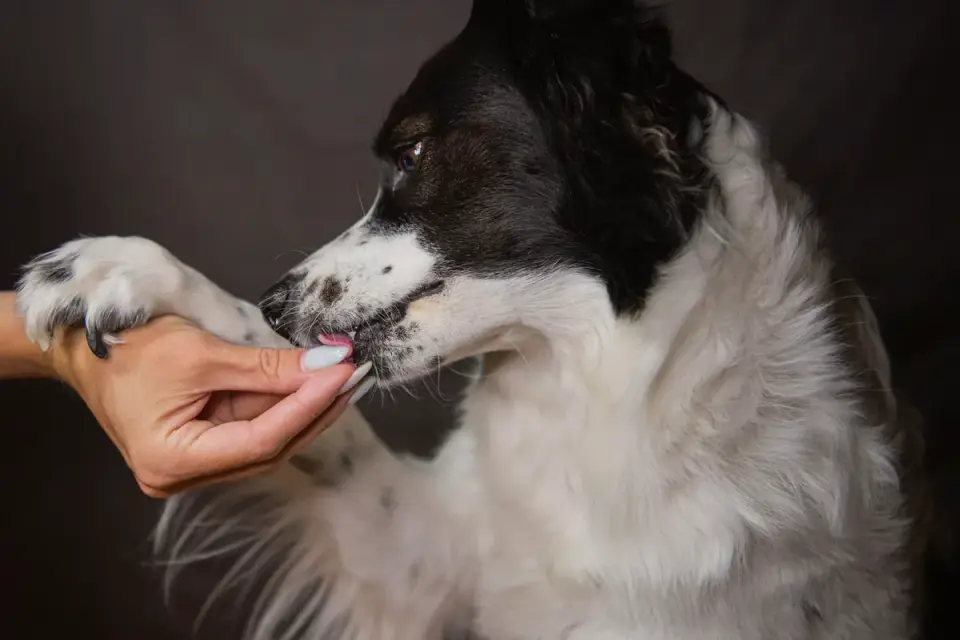
The mistake I see most often isn’t the wrong grinder — it’s the right grinder introduced on the day the nails are already too long and the dog is already stressed. Fear Free Happy Homes frames this well: nail trims go better when the tool shows up as a neutral object first, paired with treats, weeks before it’s ever turned on near a paw. That’s the same desensitization logic behind how to get a dog used to tooth brushing — let the dog meet the object, reward calm handling, and only then introduce the actual task. Run the grinder in another room so the dog hears the motor without associating it with their own paw. Touch paws daily, separate from any trim. Reward stillness, not just the finished nail.
If you’ve got a dog who’s anxious about handling in general, not just nails, it’s worth looking at what’s actually driving that — some owners find a calming supplement helps take the edge off before a session, and it’s worth understanding the difference between chamomile vs L-tryptophan for calming dogs before you reach for either one.
Short sessions beat long ones, every time. One or two nails is a win.
Why the Nail Grew That Long in the First Place
A grinder or clipper only fixes the nail you can see. It doesn’t fix a trim schedule that’s too spread out, and overgrown nails that keep recurring usually point to a maintenance gap rather than a tool problem — most dogs need attention every three to four weeks, sooner for dogs that spend most of their time on soft grass or carpet instead of pavement that naturally files nails down. That’s the same reason a German Shepherd’s coat blow needs its own rhythm instead of a once-a-year deep clean — grooming problems compound when the interval between sessions is too long, not just when the technique is wrong. If nails are splitting, cracking, or the dog is limping afterward, that’s a reason to have a veterinarian look at the nail bed itself rather than assume a better grinder will solve it.
Whole Dog Journal makes a point I agree with completely: professionals lean toward grinders because the incremental control reduces the chance of hitting the quick, but they still keep clippers on hand for dogs who won’t tolerate the noise, or for taking off the bulk of an overgrown nail before finishing with the grinder. The two tools aren’t rivals so much as a two-step process for the hardest cases.
Where I Land
In my own practice, the dogs who do best with a grinder are the ones whose owners treated the first few sessions as training, not grooming — five minutes of paw touching and a quiet motor running nearby, weeks before the actual filing starts. The dogs who struggle are almost always the ones whose first exposure to the tool was also their first overgrown-nail emergency, tool and stress arriving at once. I’ve watched that difference play out across a decade of nail trims, and it has very little to do with which grinder brand ended up in the drawer.
So here’s the honest verdict: buy a grinder with variable low-speed settings, a guard, and a quiet motor, and introduce it slowly, before you need it. If your dog genuinely cannot tolerate the noise after a real desensitization effort, sharp clippers used quickly and confidently are a perfectly reasonable fallback — not a failure. What I won’t tell you is that any single tool guarantees a stress-free trim. That part is still on the training, every time.
Frequently asked questions
Are nail grinders safe for dogs with black nails?
Yes, and they're often safer than clippers for dark nails specifically, since you can't see the quick to judge where to cut. Grinding in short passes lets you stop as soon as the nail's center starts to look slightly darker or moist, which is your cue to quit for that nail.
How often should I grind my dog's nails?
Most dogs do well on a three-to-four-week schedule, though dogs that walk mostly on soft ground need it more often than dogs that get regular pavement time, which files nails down naturally between sessions.
My dog panics at the sound of the grinder. What now?
Back up to desensitization before you try again: run the grinder in another room so your dog hears the motor without it touching a paw, and reward calm behavior. If the fear doesn't ease after real practice, sharp clippers used quickly are a legitimate alternative, not a downgrade.
Can I use a regular hardware-store rotary tool instead of a pet-specific grinder?
Some owners do, but pet-specific grinders are built with lower, dog-appropriate speeds and guards designed for paw safety. A general-purpose rotary tool often runs faster and louder than what a nervous dog can tolerate.
Sources
- How to Trim a Dog's Nails — VCA Animal Hospitals
- Nail Trims Don't Have to Be Scary. How to Keep Them Fear Free for Both of You — Fear Free Happy Homes
- Grinders vs. Clippers: What's Best for your Dog's Nails? — Whole Dog Journal