Hyaluronic Acid Injections vs. Oral Chews for Dogs: Which One Actually Fits Your Dog's Joint
Injections rebuild joint fluid fast under anesthesia; chews work slower through the gut — the choice comes down to the dog's stage of disease.

On this page
Start here: if your dog already has a vet-confirmed osteoarthritis diagnosis and a joint that’s clearly limiting mobility, the injection conversation belongs with your vet first, not a chew aisle. If you’re earlier in the process — a dog that’s just started slowing down, no imaging yet, no diagnosis — an oral chew is the lower-stakes place to start while you build the fuller picture. That’s the fork. Everything below is about why.
I had a nine-year-old boxer named Duchess come into my exam room on a Thursday afternoon a few winters back, and her owner had already tried three different joint chews before booking the visit. Duchess weighed 58 pounds, had started refusing the stairs to the bedroom sometime around Halloween, and by January she was hesitating before jumping onto the tailgate of the family SUV. The owner wanted to know, reasonably, whether she’d wasted four months on the wrong product. Radiographs showed moderate stifle osteoarthritis. That’s the kind of case where I trace the joint’s own feedback loop — synovial fluid quality, cartilage load, inflammatory signaling — before I recommend anything, because a chew that’s appropriate for a dog with mild, early laxity is not doing the same job an injected joint needs.
The two products are not solving the same problem
Intra-articular hyaluronic acid injections put the molecule directly into the joint capsule, under sedation or anesthesia, where it’s mixed with synovial fluid immediately. A A placebo-controlled study comparing the efficacy of intra-articular injections of hyaluronic acid and a novel hyaluronic acid-platelet-rich plasma conjugate in a canine model of osteoarthritis: placebo-controlled study in a canine osteoarthritis model found that intra-articular HA injections measurably improved outcomes compared to saline, working through anti-inflammatory and analgesic mechanisms right at the site of joint breakdown. That’s the appeal: the dose lands exactly where cartilage and synovium are under load, with no gut wall, no liver, no absorption variable in between.
Oral HA chews take the opposite route. The molecule has to survive digestion, cross the intestinal lining, and reach the joint through circulation — a much longer feedback loop with more places to lose potency. A study on Effects of Oral Hyaluronic Acid Administration in Dogs Following Tibial Tuberosity Advancement Surgery for Cranial Cruciate Ligament Injury: oral hyaluronic acid administration in dogs following tibial tuberosity advancement surgery found a measurable rise in synovial hyaluronic acid concentration in dogs given oral HA post-surgery, which is genuinely reassuring evidence that some of the molecule does complete that trip. But “some completes the trip” and “restores a degraded joint the way an injection does” are different claims, and the endocrine-and-metabolic principle I keep coming back to with any oral supplement holds here too: absorption is not the same as clinical effect at the target tissue.
Where the timeline actually diverges
This is where owners get frustrated, so it’s worth saying plainly: a single-sentence truth first. Injections work in days; chews work in months, if they work at all for that dog’s stage of disease.
An injected joint typically shows a clinical response within one to two weeks of the procedure, and effects from a course of injections can persist for months before a repeat series is needed — timing your vet will set based on exam findings, not a fixed calendar. Oral HA, by contrast, depends on sustained daily dosing before synovial concentration climbs meaningfully; the TTA study measuring joint-fluid HA levels used chronic administration, not a single dose, before detecting a difference. If you start a chew expecting injection-speed results, you’ll likely conclude it “didn’t work” before it had a real chance to.
Cost cuts the other direction. Injections require a veterinary visit, sedation in many protocols, and repeat dosing — a real recurring expense and a real anesthesia consideration for older or higher-risk dogs. Chews are a daily supplement cost, no sedation, no clinic visit, which is exactly why they’re the reasonable first move for a dog that isn’t yet at the point of needing a procedural intervention.
What to actually check before you buy either one
For injections, the question is entirely clinical: does your vet consider this joint, at this stage, and this dog’s anesthesia risk, a good candidate? That’s not a label question — it’s an exam-room one, and there’s no shortcut around a diagnosis first.
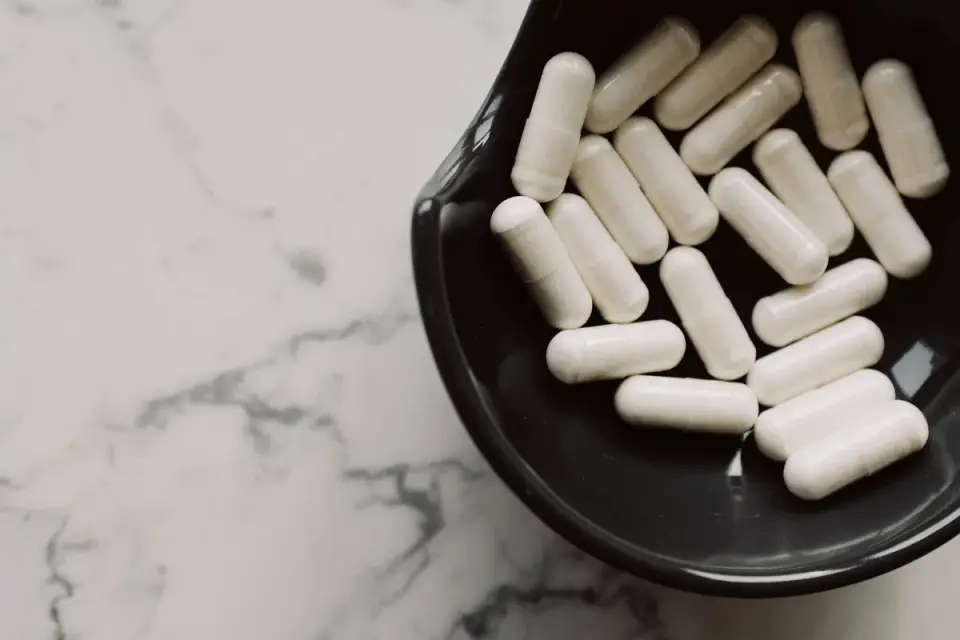
For chews, molecular weight and manufacturing accountability matter more than the marketing. Products that carry the National Animal Supplement Council seal have passed a third-party audit of manufacturing and labeling practices — worth knowing that NASC certifies process and label accuracy, not efficacy, so a seal tells you the company is accountable, not that the specific product will work for your dog’s joint. If you’re trying to understand whether HA chews clear that efficacy bar at all, our deeper look at whether hyaluronic acid actually works for dog joints walks through the research in more depth than a comparison piece like this one can.
Duchess ended up on both, in sequence, and it’s worth walking through because the order mattered. Her vet did a single intra-articular injection first, given the moderate radiographic changes, and reassessed her gait at three weeks — a noticeable improvement getting onto the tailgate, though the stairs were still inconsistent. From there, the plan shifted to a daily oral HA chew alongside weight management, since Duchess had crept two pounds over her ideal weight and extra load on an already-affected stifle works against every other intervention. By the following summer, the owner reported the stair hesitation had mostly resolved, though she was careful to describe it as one dog’s case, not a guarantee. That sequencing — procedural first for an already-degraded joint, oral maintenance after — is the pattern I see work most often, though every dog’s joint disease timeline is its own case.
If your dog’s slowdown is milder and earlier, it’s also worth ruling out things people commonly mistake for joint pain, including car-sickness behaviors that get misread as reluctance to move — our ginger versus chamomile for dog car sickness piece covers that distinction if travel avoidance is part of what you’re seeing. And if a chew is one of several supplements you’re weighing cost against, our breakdown of whether a bigger bag of chews actually costs less per serving applies the same per-dose math to joint products, even though it was written around probiotics.
The bottom line
Neither product replaces a diagnosis, and neither is inherently the “better” one — they’re solving different points on the same disease curve. An injection meets a joint that’s already lost fluid quality where it lives, fast, under veterinary control. A chew is a slower, lower-stakes daily habit that may support a joint earlier in the process, provided the molecular weight and manufacturing are legitimate. So which one does your dog actually need right now — the one that’s already limping, or the one that’s just starting to hesitate on the stairs?
Frequently asked questions
How fast does hyaluronic acid work for dog joints — injection versus chew?
An intra-articular injection typically shows a clinical response within one to two weeks. Oral chews depend on sustained daily dosing, and research measuring synovial HA levels after oral supplementation used chronic administration rather than a single dose, so expect a slower timeline, often measured in weeks to months.
Can I give my dog an oral HA chew instead of an injection?
For a dog with mild or early joint changes, a chew is a reasonable lower-stakes starting point. For a dog with a confirmed, more advanced osteoarthritis diagnosis, that's a conversation for your veterinarian, since the injection delivers the molecule directly to the joint rather than relying on gut absorption.
Does a NASC seal mean an HA chew will work?
No. The NASC seal confirms the manufacturer passed a third-party audit of manufacturing and labeling practices — it doesn't certify that the product is clinically effective for your dog's specific joint condition.
Sources
- A placebo-controlled study comparing the efficacy of intra-articular injections of hyaluronic acid and a novel hyaluronic acid-platelet-rich plasma conjugate in a canine model of osteoarthritis — PMC
- Effects of Oral Hyaluronic Acid Administration in Dogs Following Tibial Tuberosity Advancement Surgery for Cranial Cruciate Ligament Injury — PMC
- National Animal Supplement Council — NASC