Dog Car Seat Belt vs Crate vs Barrier: Which Restraint Is Safest?
Between a seat belt harness, a crate, or a barrier, the honest answer for most dogs starts with what crash testing has actually measured.

Every few months a new “crash-tested!” harness shows up on my feed with a slow-motion clip and a caption implying it’s basically a car seat for dogs. Some of that is real engineering. A lot of it is marketing borrowing the language of a test the product never actually passed. So before you buy anything, it helps to know what a seat belt harness, a crate, and a barrier are each mechanically doing to a dog’s body in a crash — because they are not solving the same problem.
A harness restrains. A crate contains. A barrier only redirects. Those are three different jobs, and mixing them up is how owners end up with a product that’s wrong for their dog’s size or their car’s layout.
How a seat belt harness works. A car harness clips into the vehicle’s existing seat belt buckle or a LATCH anchor, and its job is to keep the dog’s body decelerating with the seat rather than continuing forward at the vehicle’s pre-crash speed. The strap load has to cross the chest and shoulders, not the throat, which is why a harness rated for walking is not the same product as one built to hold body weight under crash forces. The Center for Pet Safety has run harness crashworthiness testing since 2011, and its published work has repeatedly found that many harnesses marketed for car use fail structurally, with buckles breaking or straps tearing loose well before the forces a real 30-mph frontal impact would generate. A harness that passes static load testing but hasn’t been through an actual crash sled test is a walking harness with a seat belt clip, not a crash-tested one.
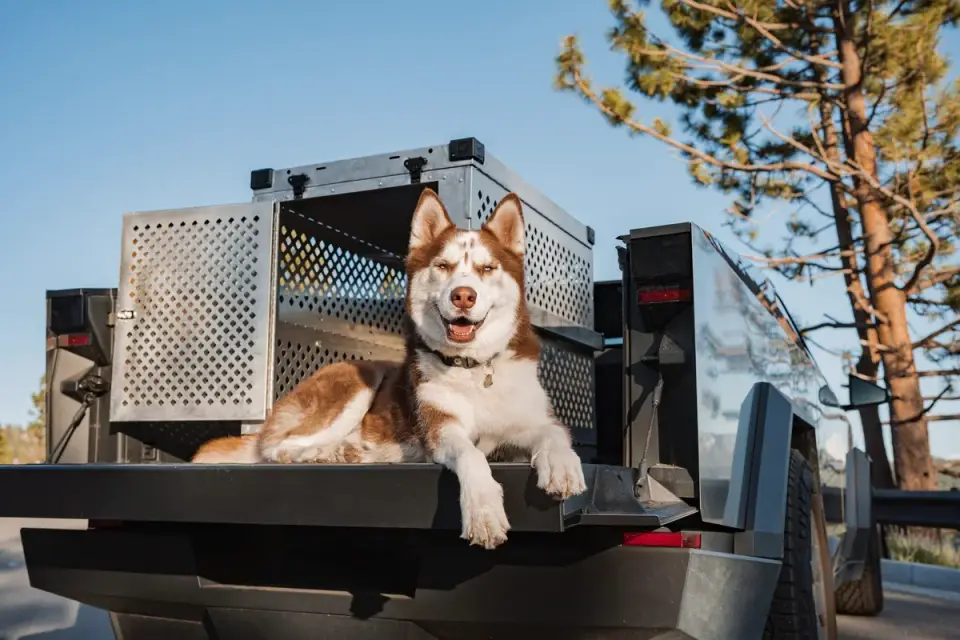
How a crate works. A crate protects by containment: the dog stays inside a rigid or semi-rigid shell that’s tied down so it can’t become a projectile itself. That only works if the crate is secured to the vehicle’s frame, not just wedged against the seats, and if the crate’s own walls and door latch can survive the impact without collapsing inward. Subaru of America partnered with the Center for Pet Safety on a multi-year crate and carrier crash study, and its Subaru U.S. Media Center: press release on the 2015 results described the findings as both “promising and shocking” — some crates held together under real crash-sled conditions while others failed outright, which is a useful reminder that “crate” is not a single safety category any more than “harness” is.
How a barrier works. A cargo barrier, whether it’s a mesh screen or a metal grate behind the back seat, doesn’t restrain the dog at all. Its only job is to stop an unrestrained dog in the cargo area from being thrown into the passenger compartment during a hard stop or crash — it protects the people up front more than it protects the dog. PetMD frames barriers as a use-case option for larger dogs who ride loose in a cargo space, not a substitute for a harness or crate when a dog rides in the main cabin.
I had a client years ago with a sixty-pound mixed-breed rescue, a dog she’d had for about four months, who rode in the far back of her SUV behind a mesh barrier because he was too big, in her words, “to bother with a harness.” What she hadn’t clocked was that the barrier was doing nothing for him — it was only there to keep him from sliding into her seat. On a hard highway stop one afternoon he hit the barrier hard enough to bend the frame and came away with a bruised shoulder that had him favoring the leg for close to a week. Nobody was hurt worse than that, and the vehicle damage was minor, but it was the visit where we talked through what a barrier is actually for, and she left with a crash-tested harness instead. That’s the gap I see most often: owners assume any restraint product is protecting the dog, when some of them are only protecting everyone else.
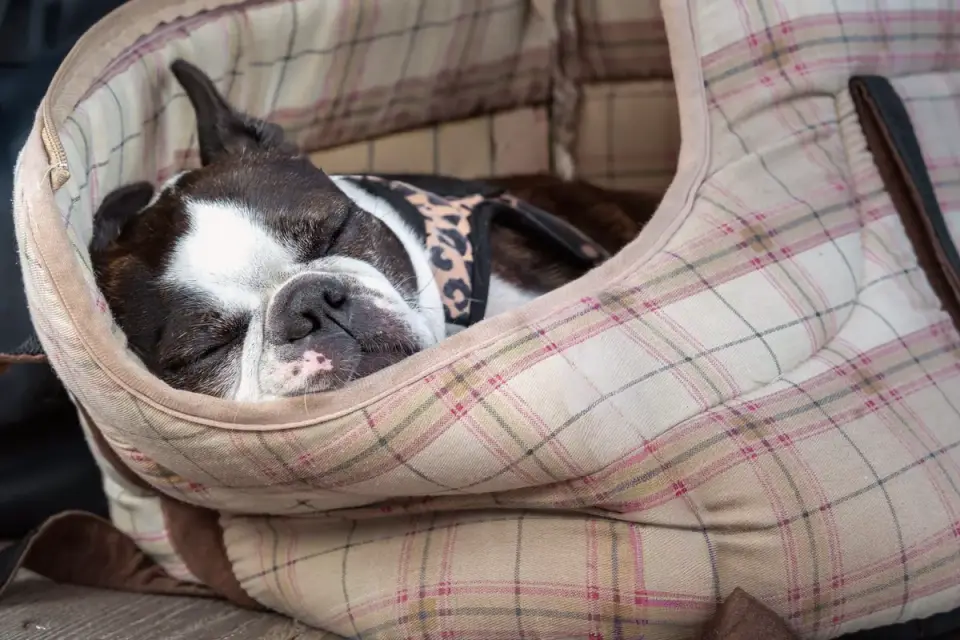
None of these categories are interchangeable, and none of them are one-size-fits-all. A small dog in a soft-sided carrier that’s belted into the back seat is being contained in a way that’s closer to a crate than a harness. A giant-breed dog may be too large for any crate that fits in a standard back seat, which pushes the harness or a properly secured hard crate in the cargo area toward the more realistic option. A puppy still learning to ride calmly may do better started in a secured crate, where there’s no strap to chew through, before transitioning to a harness once car manners are more reliable — a timeline that’s usually measured in weeks of short, calm trips rather than a single ride.
What I tell clients, expectation first, is this: don’t buy on the word “tested” alone — look for a specific crash-test source, a stated weight rating, and confirmation the buckle or strap connects to the vehicle’s own belt or LATCH system rather than just to itself. A four-dollar clip-on tether that “meets safety standards” printed on the packaging has usually met no external standard at all. For a mid-sized dog riding in the back seat, a harness that’s been through independent crash-sled testing and properly fitted is the option with the clearest evidence behind it; for a dog too large or too anxious for a harness, a tied-down, structurally sound crate is the more defensible fallback; a barrier is worth adding on top of either one if your dog also has cargo-area access, but it shouldn’t be the only thing standing between your dog and the windshield.
If your dog also tends to get carsick before you even reach the highway, that’s worth solving separately — see our guide on ginger vs. chamomile for dog car sickness and the deeper dive into why some dogs vomit every single ride. And if car trips are really about getting to the airport, our guide to flying with a dog and our piece on measuring your dog for an airline-approved carrier pick up where car restraint leaves off.
I think about that sixty-pound dog every time I see a barrier marketed as a complete travel safety solution. His owner wasn’t careless — she’d just never had anyone walk her through what the product in her trunk was actually built to do. That’s the whole job here: not scaring anyone off car rides, but making sure the piece of gear between your dog and the windshield is rated for the job you’re asking it to do. So which restraint is safest for your dog — the one built to survive a real crash test, or the one that just looked reassuring on the shelf?
Frequently asked questions
Is a dog seat belt harness safer than a crate?
It depends on the dog's size and the specific product. Independent crash-sled testing from the Center for Pet Safety has found wide variation in both categories, so the specific harness or crate's test results matter more than the category itself.
Does a cargo barrier protect my dog in a crash?
Not directly. A barrier mainly stops an unrestrained dog from being thrown into the passenger area; it doesn't reduce the forces the dog itself experiences the way a harness or a secured crate can.
How do I know if a harness is actually crash tested?
Look for a named independent test source and a stated weight limit, and confirm the harness clips into the vehicle's seat belt or LATCH anchor rather than only to itself.
Sources
- Pet Carrier & Crate Crash Test Research — Center for Pet Safety
- Subaru of America and Center for Pet Safety Studies Showcase Promising and Shocking Crash Test Results of Pet Crates and Carriers — Subaru U.S. Media Center
- Dog Car Safety: Do You Need a Dog Car Seat, Dog Seat Belt, Barrier or a Carrier? — PetMD