
On this page
Your For You page has decided you need a dachshund harness, usually a pastel step-in worn by a very patient miniature dachshund who trots away without pulling. Here is the decision fork before you tap buy: are you buying the look, or are you buying how force travels through a long spine when your dog hits the end of the leash.
In day-to-day practice, vets often see the second part matter more. Dachshunds carry increased risk for intervertebral disc disease because of their chondrodystrophic build, and sudden jolts, twisting, and repeated neck pressure do them no favors. The Merck Veterinary Manual notes that this disc degeneration can lead to pain, weakness, and in severe cases loss of function, which is why steady, low-impact handling matters so much for this breed.
That does not mean a harness prevents disc disease. No harness can. It means the right dachshund harness supports comfortable movement and may help maintain normal activity without loading the neck or concentrating force behind the shoulders.
The viral harness problem in 30 seconds
Most viral picks fail in the same three places. The chest strap sits like a shoestring across the point of the shoulder, the neck opening pulls up when the dog lunges, and the belly strap lands right behind the front legs where skin is thin. The result is chafing in front and a hammock effect underneath, with the spine taking the twist when the leash goes tight.
A spine-friendlier pattern does the opposite. It spreads load across the broad sternum and ribs, keeps the neck free, and lets the front legs swing without the harness migrating forward. Think snowshoe, not string.
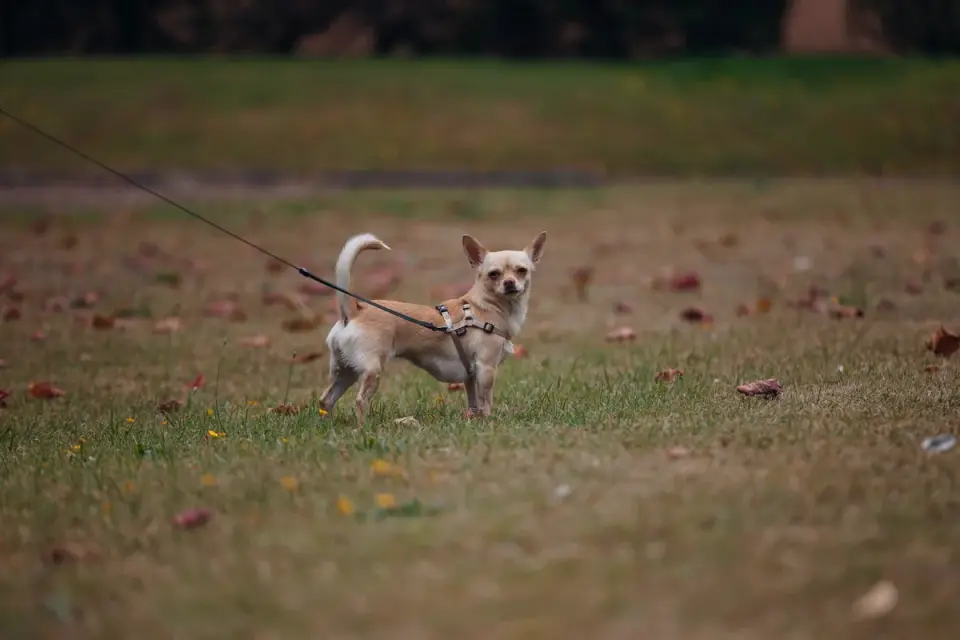
What chest-spreading support looks like
Look for a Y-shaped front that runs down the center of the chest and splits around the neck, rather than a straight strap across the trachea. The chest plate or padded panel should be wide enough to cover the breastbone, with smooth edges and no bulky buckle sitting over the joint.
Fit beats padding. You should be able to slide two fingers under every strap, the front ring should sit on bone rather than soft throat, and the harness should stay centered when you gently pull sideways from the leash attachment. If it rotates or rides into one armpit on a living-room test, it will do worse on a squirrel day.
Back attachment placement matters too. A leash clip set too far back encourages a dachshund to lean and pull like a sled dog, which loads the thoracolumbar junction. A clip over or just behind the withers keeps the line of pull level. For strong pullers, a front-clip option can reduce forward momentum, as explained in Front-Clip vs Back-Clip Dog Harness: What Actually Stops the Pulling.
Sizing for a tube, not a box
Dachshunds are not small Labradors. Their chest depth, narrow waist, and short legs mean weight-based size charts often mislead. Measure around the widest rib, around the lower neck where a collar would sit, and from breastbone to just behind the front legs for length.
Choose length first, then adjust girth. A harness that is technically the right girth but too short will pinch behind the elbows within a few blocks. Long-bodied dogs often need a dachshund-specific cut or a three-strap design with an extra belly strap to keep the back panel from shifting. Check the same two-finger clearance after a short walk, because warm muscle and coat compression change the fit.
Material choice affects seasonal comfort and cleanup. A padded mesh chest breathes well for summer, while coated webbing sheds mud and pond water. The breakdown in Biothane vs Nylon vs Leather Long Line: Which One Actually Holds Up? is useful context for how those materials handle sweat, rain, and repeated washing.
When to skip the cute one
Skip thin step-ins with a single narrow chest strap if your dog lunges, spins, or pulls hard toward other dogs. Those designs concentrate pressure in a small area and offer little directional control.
Also skip any harness that gaps at the neck but feels tight around the belly. That shape will ride forward and press on the trachea when the leash tightens. Dogs with coughing, honking, exercise intolerance, or known neck sensitivity need a particularly careful fit, and a fixed-length leash often gives clearer feedback than an elastic one, a trade-off covered in Bungee Leash vs. Fixed Leash for a Lunging Dog: What Actually Protects Necks and Shoulders.
One short test tells you most of what you need.
Clip the leash, let your dog hit the end gently in a hallway, and watch where the harness moves. No throat press, no armpit pinch, no twisting over the spine. Prevention is unglamorous home care, leash skills, weight control, and ramps instead of couch launches. The American College of Veterinary Surgeons overview of disc disease underscores why low-impact routines, healthy weight, and prompt care for back pain support better outcomes than any single piece of gear.
Pick the boring harness that passes that hallway test. Your dachshund will never go viral for it, but those shoulders and that long back will move easier for years.
Frequently asked questions
Should a dachshund wear a harness instead of a collar?
For walks, yes for most dachshunds. A well-fit Y-front harness spreads pressure across the chest and keeps force off the throat and long back, while a collar concentrates pull on the neck.
What harness shape protects a dachshund back best?
A Y-front with a wide padded chest, free shoulder movement, and a clip over the withers. Avoid narrow step-ins that pinch behind the elbows or ride up into the throat when the dog pulls.
How tight should a dachshund harness be?
Snug enough to stay centered with two fingers under every strap. If it rotates sideways, gaps at the neck, or rubs behind the legs after a short walk, resize or try a longer dachshund-cut pattern.
Sources
- Intervertebral Disc Disease — American College of Veterinary Surgeons