Are Dog Training Classes Worth It? A Vet's Honest Breakdown
If your dog struggles around other dogs or people, skip group class and start one-on-one — that's the one line I won't budge on.
On this page
Here’s the fork I ask owners to sit with before they book anything: is your dog already fine around new dogs and new people, or not? That single question decides whether a group class is worth the drive, or whether it’s going to set you back.
I’ve had this conversation more times than I can count, standing in an exam room with a leash wrapped twice around my hand while an owner tells me their eight-month-old shepherd mix “just needs more practice” around other dogs. Practice in a room full of strange dogs, all leashed, all a little keyed up, is not the same as practice. It’s exposure. And for a dog who’s already anxious or reactive, exposure without a plan tends to make things worse, not better.
Start here: sort your dog into one of two buckets. Bucket one — friendly, food-motivated, mildly distractible, no history of growling or lunging at strangers. Bucket two — anything with a bite history, obvious fear responses (tucked tail, whale eye, freezing), or reactivity on leash. Bucket one dogs are good candidates for group classes. Bucket two dogs need one-on-one work first, full stop.
What group class actually buys you
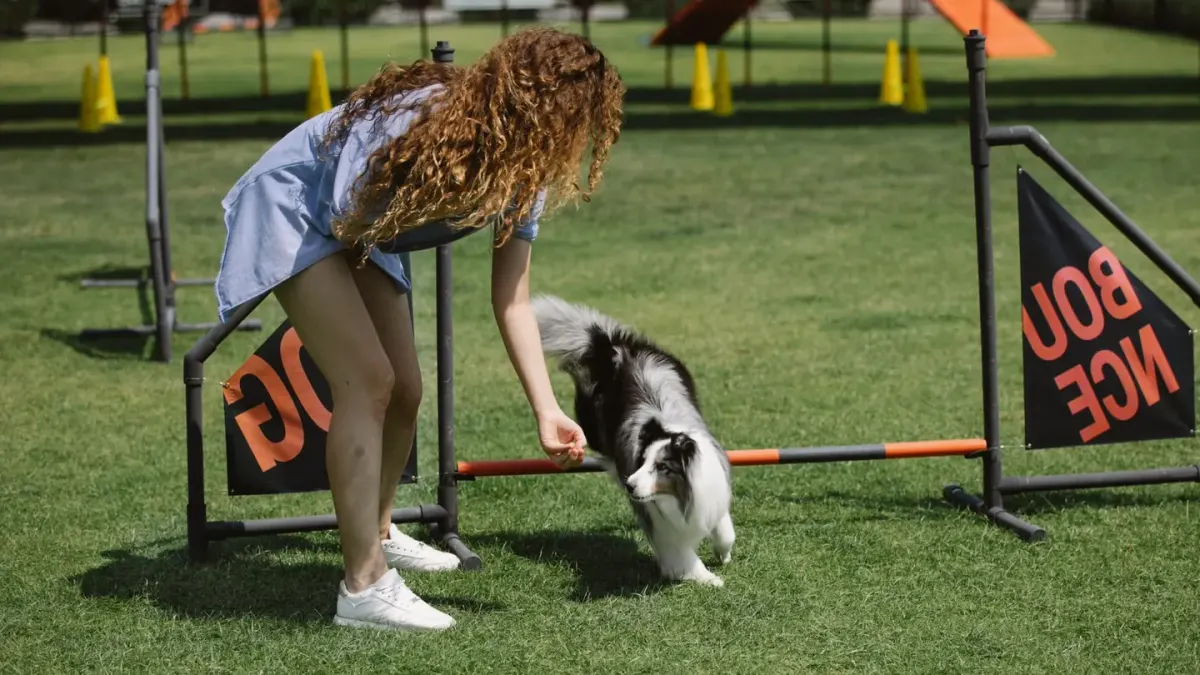
Group classes are cheap relative to private training, usually running six to eight weeks for the price of one or two private sessions. What you’re paying for isn’t really the sit-stay drilling — you can teach a sit at home in an afternoon. You’re paying for three things: a trainer correcting your handling in real time, a room full of distractions to practice against, and a deadline that gets you to actually show up and work with your dog five days a week instead of “when I remember.”
The AVSAB Position Statement On Puppy Socialization: AVSAB position statement on puppy socialization is blunt about the value of early class enrollment: puppy classes before three months of age can improve training, strengthen the human-animal bond, and support socialization during the window — roughly the first three to four months of life — when a puppy’s brain is most receptive to new experiences. That window doesn’t wait for a “complete” vaccine series; AVSAB recommends puppies start social exposure about a week after their first set of vaccines and first deworming, not months later.
Where the wheels come off
The catch nobody advertises on the flyer: skills learned in a classroom are context-bound. A dog that holds a rock-solid down-stay under fluorescent lights, six feet from a trainer with a treat pouch, may fall apart entirely on a sidewalk with a squirrel and a delivery truck. Generalizing a behavior — teaching the dog that “sit” means sit everywhere, not just in that one room — is a separate skill that most six-week group programs don’t have time to build. If a $150 class is your entire training plan and you stop practicing the day it ends, you didn’t buy much.
There’s a check the group-classes-vs-private-vs-online comparison if cost and format are the deciding factor for you — it breaks down exactly where each format earns its price and where it doesn’t.
The dog I still think about
A few years back I saw a nine-month-old Australian Shepherd named Otis, about 42 pounds, who’d been through a big-box group class twice. His owner was frustrated — Otis sat beautifully in the store’s training room but body-slammed every dog he met on walks. When I asked what happened in class, it turned out Otis had been the one dog in the group who lunged at the others from day one, and the trainer had just kept him at the back of the room rather than pulling him for individual work. Two rounds of group class, twelve weeks total, and the actual problem — poor dog-to-dog manners — had never been addressed, because group format isn’t built to address it. We started him on private sessions focused specifically on controlled, distant exposure to calm dogs, and within about six weeks his owner was reporting he could pass another dog on a narrow trail without losing his mind. That’s not a guaranteed outcome for every reactive dog, but it’s the exact failure mode I see repeat: owners assume “class” is a monolith, when the format has to match the actual problem.
Reward-based instruction matters here regardless of format. The What are Reward-Based Training Methods for Dogs (and Cats)?: AVSAB recommends reward-based methods for all dog training, including behavior modification, stating there’s no role for aversive techniques even in cases involving aggression. If you’re evaluating a class or a private trainer, ask what methods they use before you ask about price — a trainer who reaches for a prong collar or leash “pop” on a fearful dog is going to undo more than a class can fix. A PLOS ONE study on training method efficacy found reward-based methods were at least as effective as aversive or mixed methods at improving obedience, with better outcomes for the dog’s welfare and the human-dog relationship.
Building the habit outside class
Whatever format you pick, the class time itself is a small fraction of the total training your dog needs. If you’re working on markers, decide early whether you’re using a clicker or a verbal marker word and stay consistent — switching mid-program confuses the dog more than either method individually. Carrying a stocked treat pouch on every walk, not just during formal sessions, is what actually generalizes a behavior past the classroom. And if recall is the specific skill you’re chasing, how to teach a dog to come when called is worth reading before you assume class alone will cover it — most six-week programs barely scratch the surface of distance and distraction work that reliable recall needs.
I tell owners the same thing every time: budget for six months of practice, not six weeks of class. The class is the scaffolding. You’re the one doing the building.
My verdict
Group classes are worth it for social, food-motivated dogs who need structure and a deadline — the price is low relative to what you get, and the AVSAB evidence on early socialization backs the format for puppies specifically. They’re not worth it, and can actively backfire, for a dog with real fear or aggression issues; that dog needs one-on-one attention from day one, even though it costs more. So which bucket is your dog actually in — and are you being honest with yourself about it?
Frequently asked questions
How much do dog training classes typically cost compared to private lessons?
Group classes are generally far cheaper per session than private training, since the trainer's time is split across several dogs, but they trade individual attention for that lower price.
Can a fearful or reactive dog still benefit from group classes eventually?
Often yes, but usually after private work first — building confidence and basic focus one-on-one before adding the distraction of other dogs tends to go better than starting in a group.
How soon can a puppy start training classes?
AVSAB recommends puppies can begin socialization classes as early as about a week after their first vaccines and deworming, rather than waiting for the full vaccine series to finish.
Sources
- AVSAB Position Statement On Puppy Socialization — American Veterinary Society of Animal Behavior
- What are Reward-Based Training Methods for Dogs (and Cats)? — American Veterinary Society of Animal Behavior
- Improving dog training methods: Efficacy and efficiency of reward and mixed training methods — PLOS One